Not With Symbols
Eberhard Havekost
Taro Masushio
Alan Michael
Josephine Pryde
Raha Raissnia
January 17 – February 28, 2026
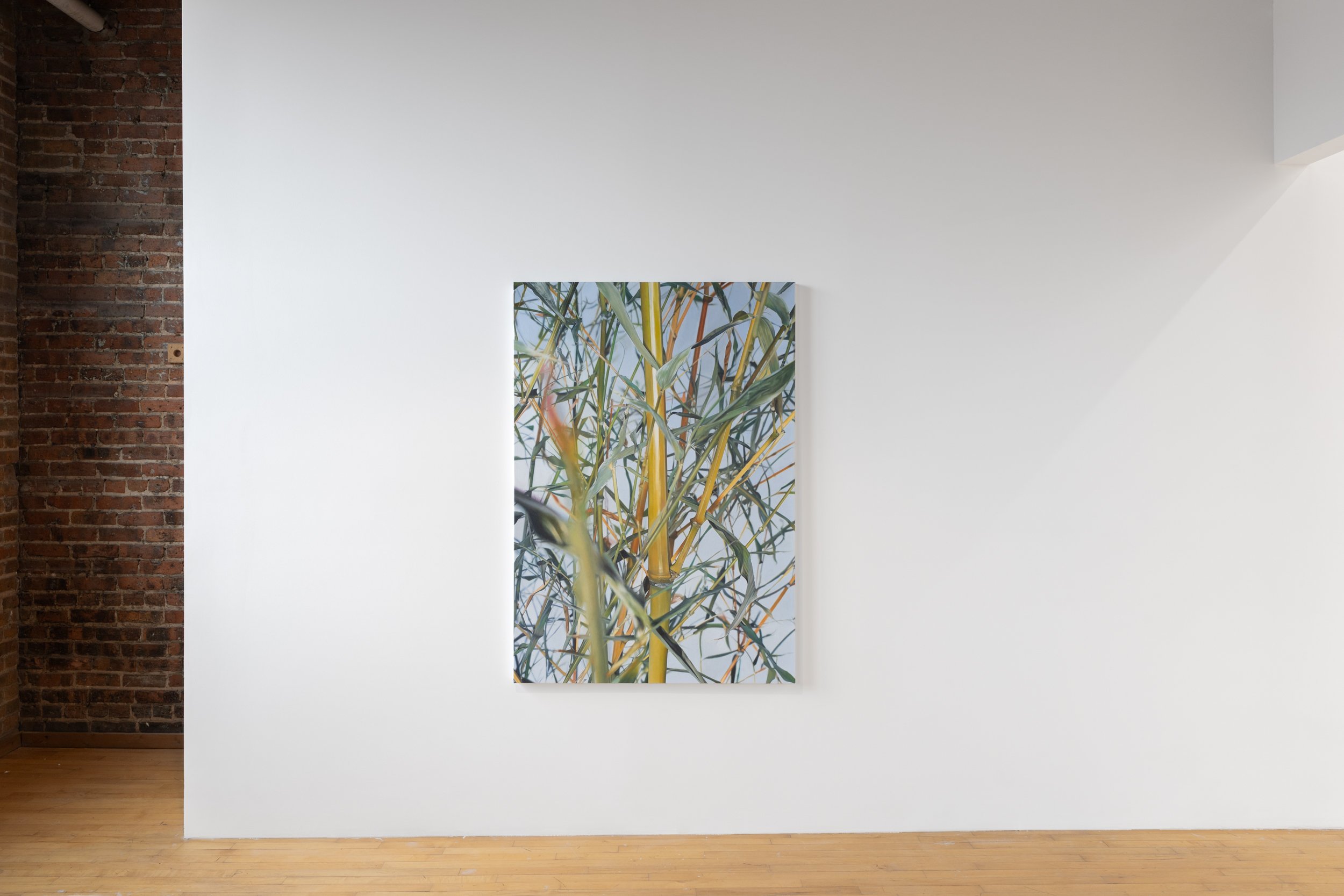
The world of magazines and flat screens is a world that has been reframed, whose depiction favors the close-up and the telephoto lens; a world so zoomed-in that it ends up being two-dimensional with no depth of field. All planes have equal value, each one obliterating the next.
— Jean-Charles Vergne
Metaphor cannot supplant the legible image and assume the role of descriptor. Ours is a distorted reality, in which images are compressed, flattened beneath glass and gloss, and lit from behind. Here, images and their meanings or representations are slippery, as are the ocular and cognitive processes we rely on to perceive and comprehend them. Despite this, logic is not abandoned altogether in favor of a nonsensical miasma of free association. Rather image itself is probed and worked to such a degree that it both dissolves and reifies within (or in spite of) its own physical, technological, political and social structures.
Ideas of legibility and readability are often at odds with the level of access granted by each of these artists. Some achieve this internally by preventing a clear understanding of their content through omission, redaction, and dilution. Others pack in detail, clarity, and specificity to such a degree that viewers are subconsciously compelled to decode the image through pure visual recognition. No matter the approach, these artists each exploit the innate structures of image and representation to expose our social and biological compulsions for resolution.
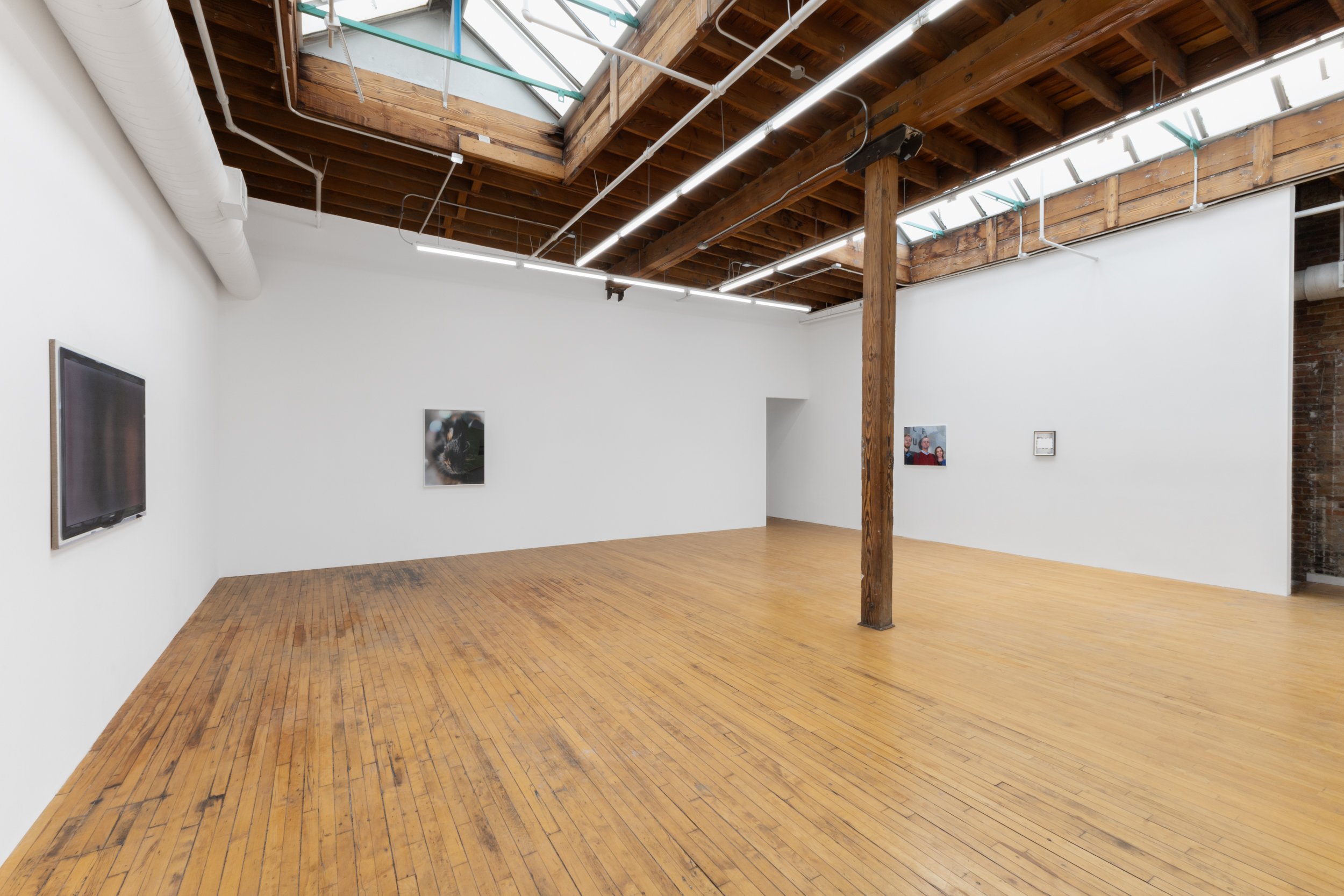
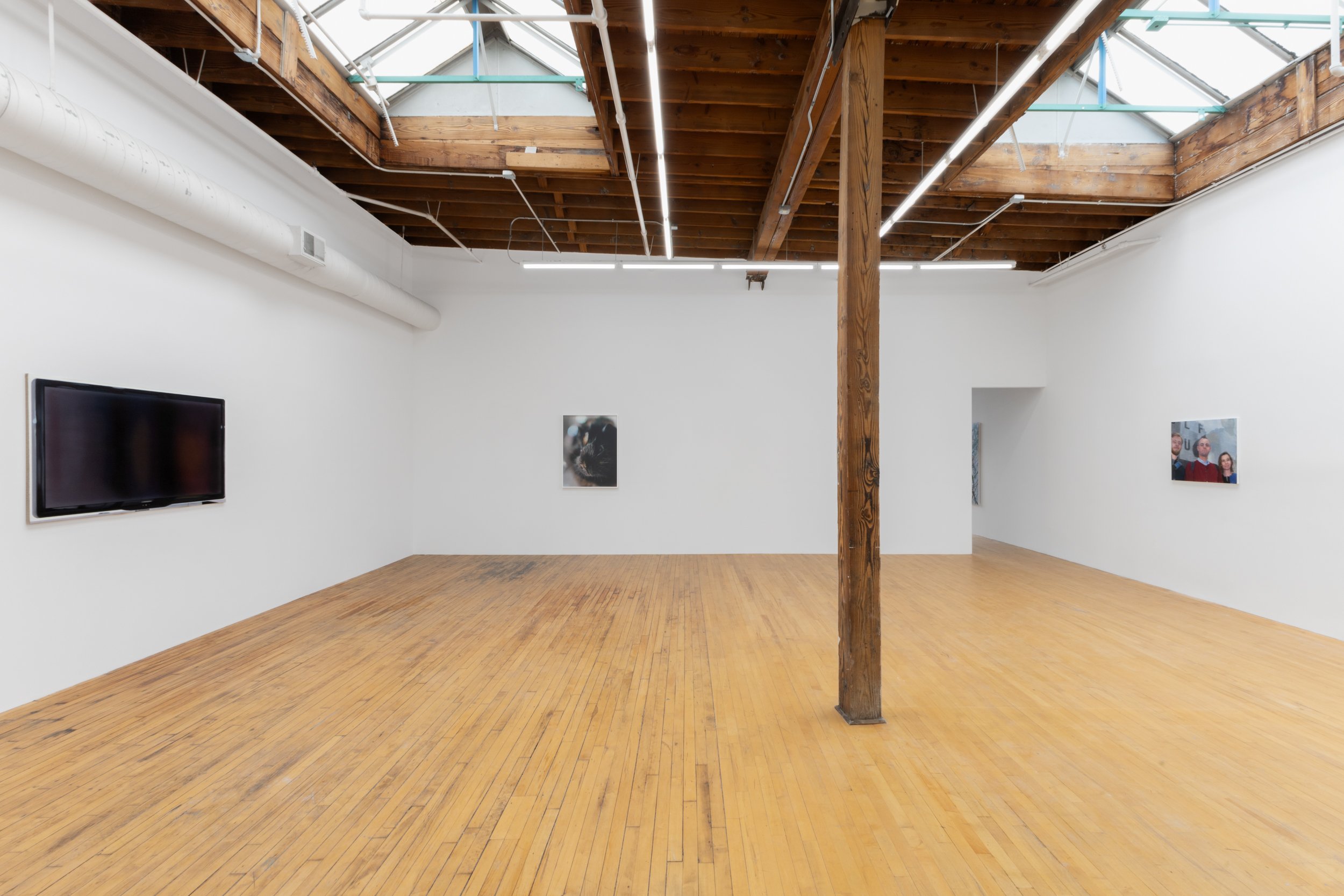
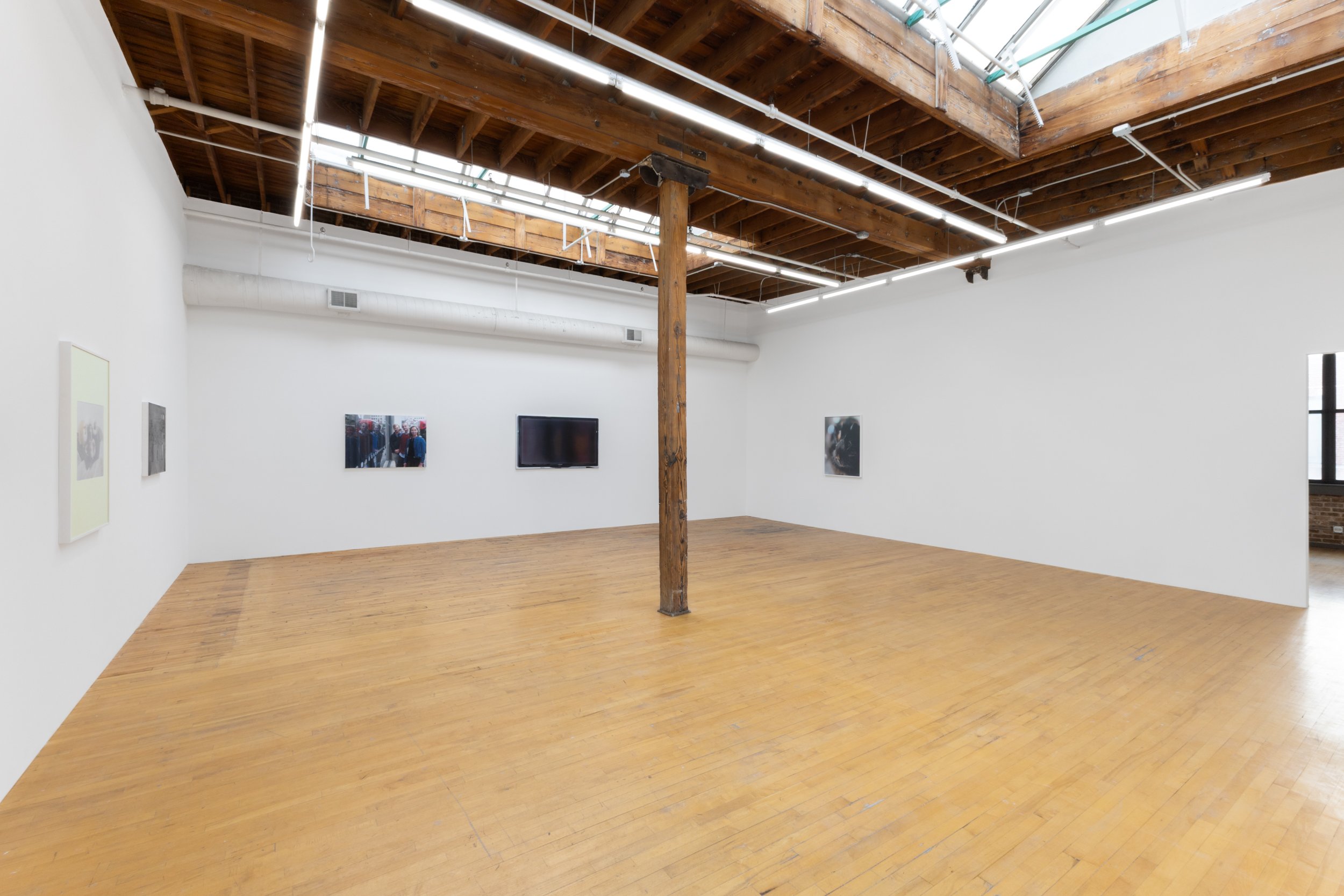
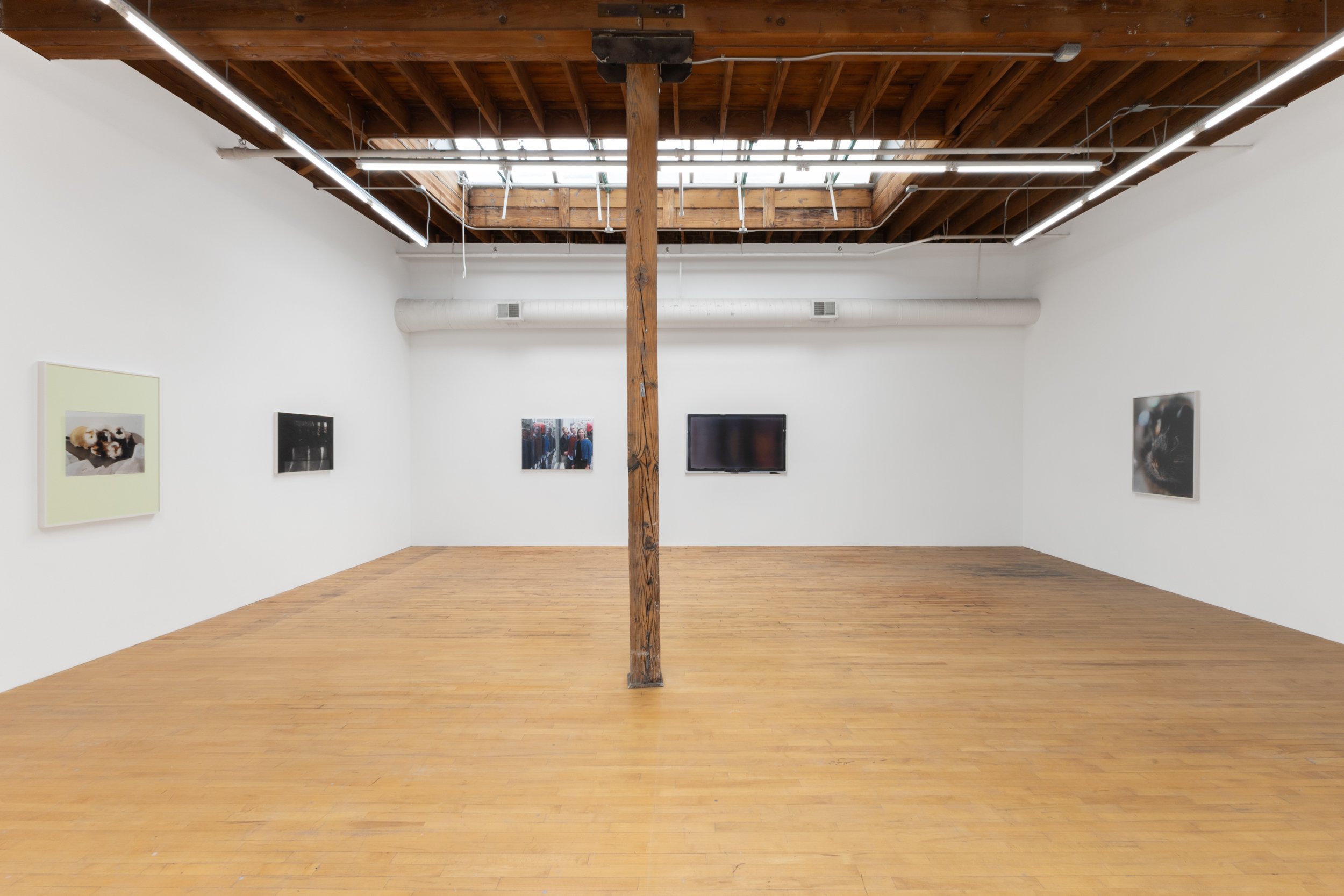
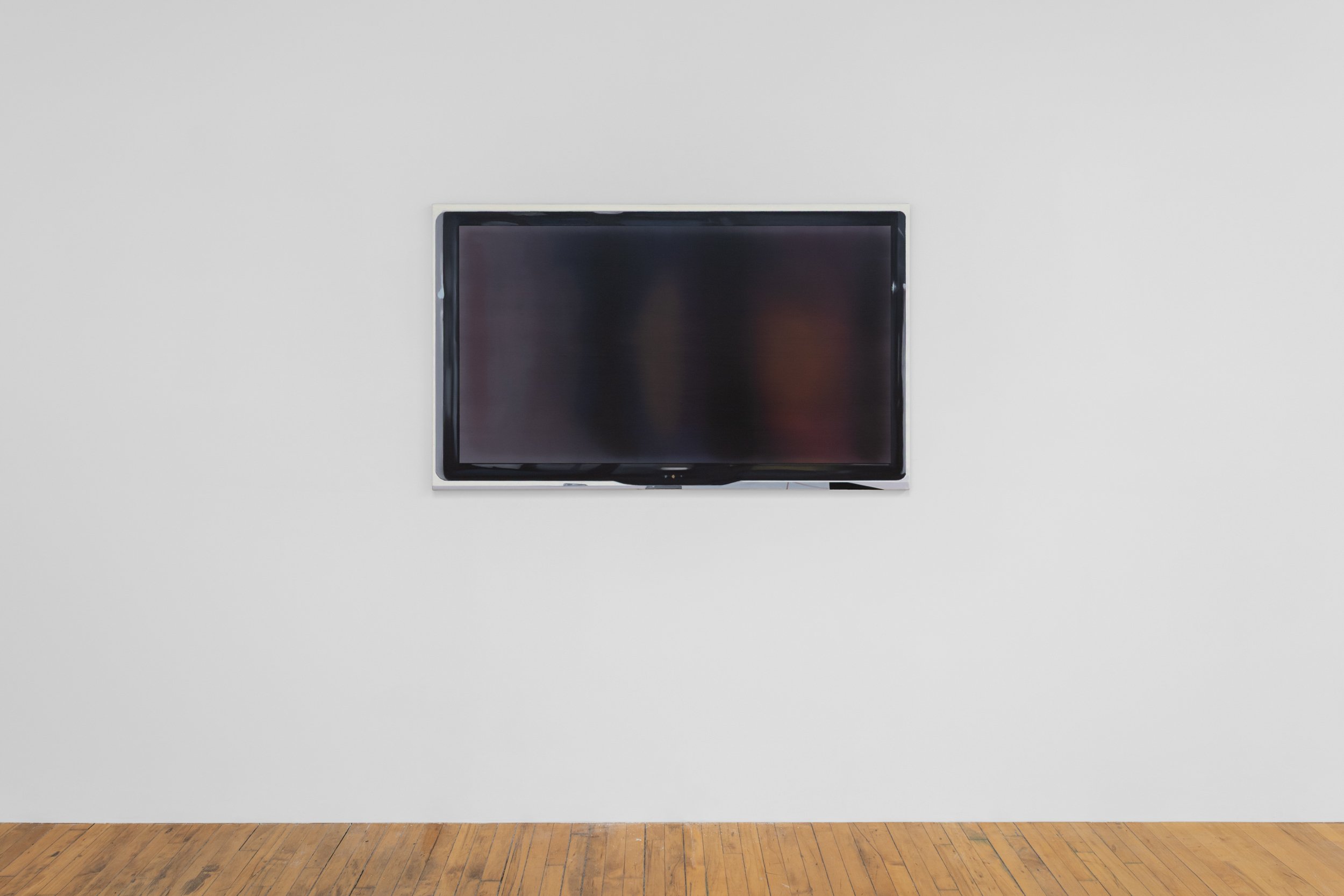
Eberhard Havekost’s Flatscreen paintings push representation and legibility to their visual limits, engulfing the surface in a flat expanse of black and grey. The monochromatic abstract field is interrupted, however, by slivers of information from the outside world which communicate a secondary condition of the image and its origins as a realistically rendered television screen. Existing somewhere between a mirror and a retina, these painted screens tease out many of the underlying conceptual motivations that permeate the artist’s practice, including a reliance on and adherence to digital imagery; a negotiation between this digital source material and the analog, surface-conscious medium of painting; and a preoccupation with the manner in which people perceive and amass images in a digitally mediated society. Much like the video still burned into a plasma screen long after losing electrical power, these tropes and impulses continue to manifest as persistent images throughout Havekost’s work.
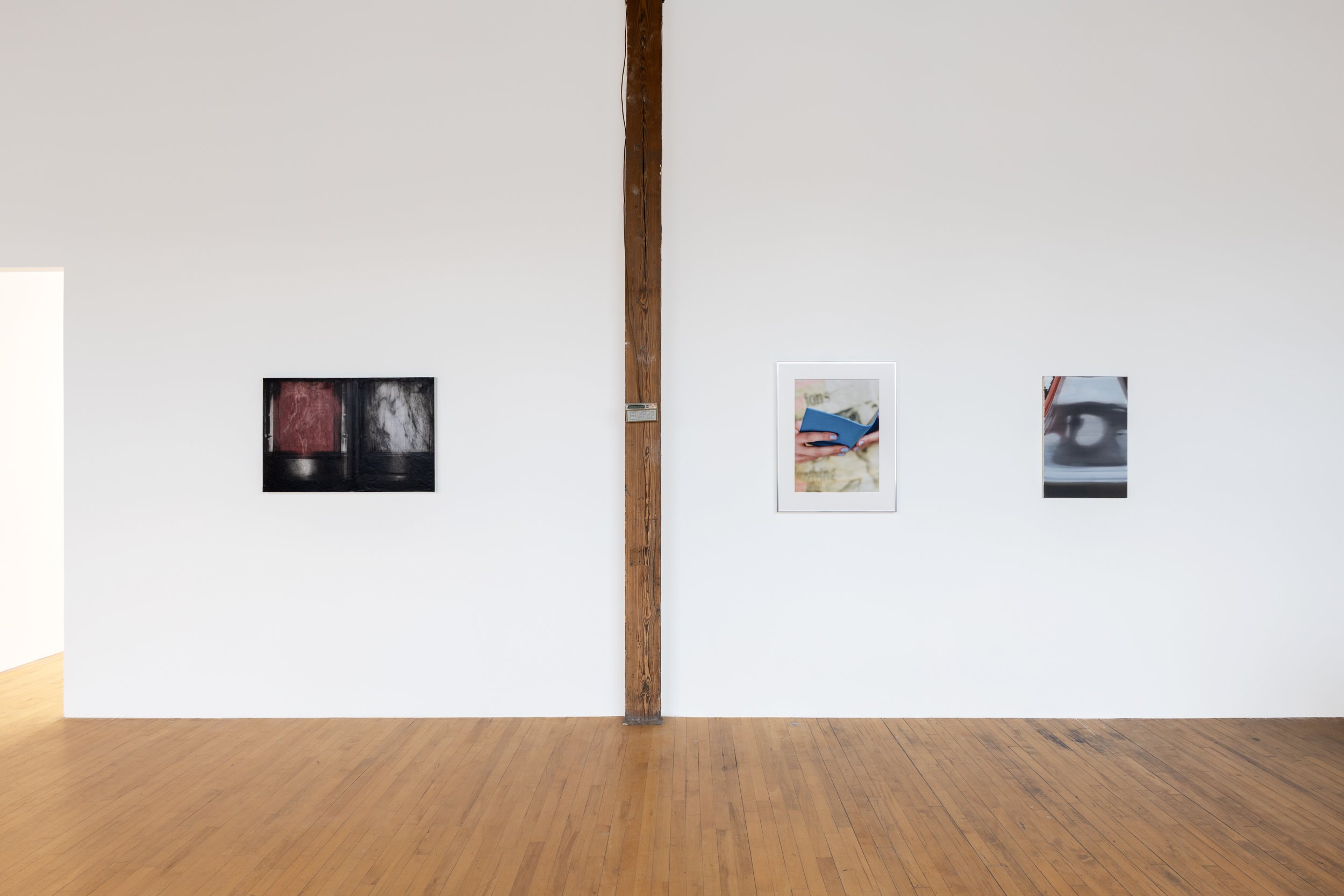
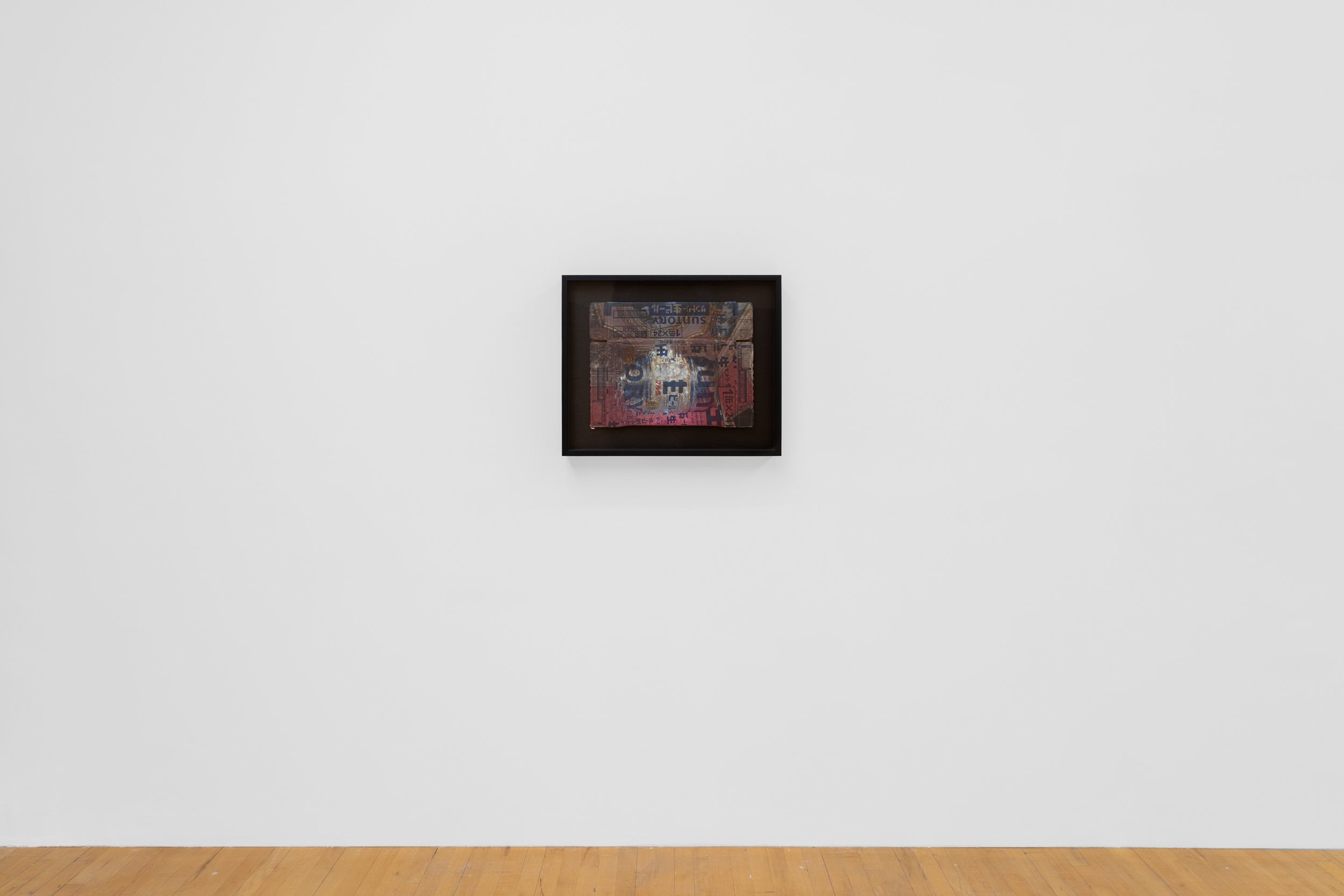
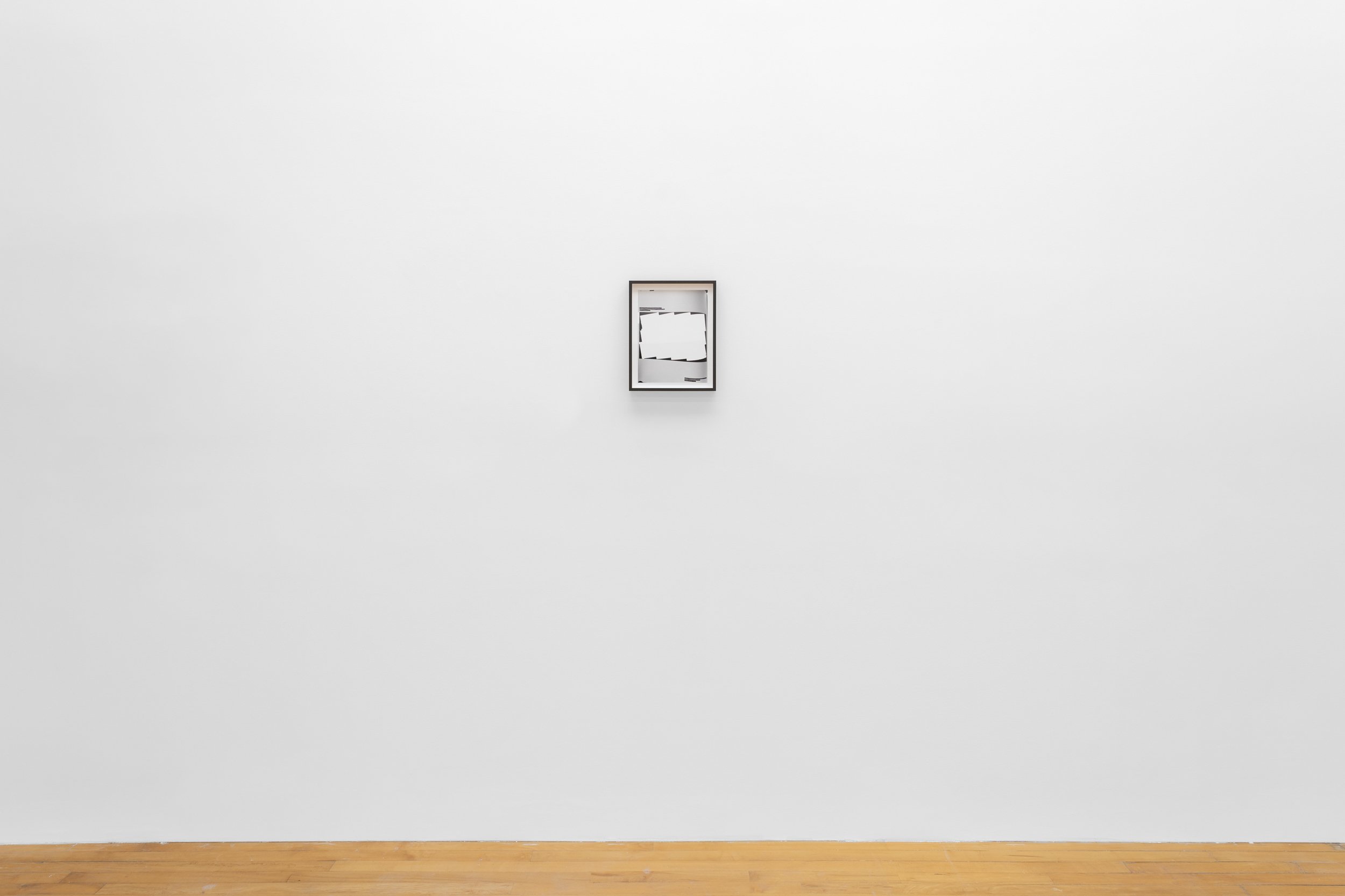
Taro Masushio reveals the kinetic dimension of images by drawing attention to their various modes of circulation and subsequent transformations. His UV prints on cardboard emphasize their own material and indexical (un)reality, accumulating as much as they conceal as they are propelled through space-time. Each successive step in their creation — beginning with the images’ initial capture by the artist’s father — acts as a sort of doubling or reflection which amplifies their emotional content and perceived significance, while also further obfuscating the presence of any one person or position involved. Masushio’s redacted inkjet print undergoes a similar temporal and arithmetic process of addition and subtraction, a reflexive sequence which produces and negates itself with each consecutive encounter or intervention. This oscillation charges the image and imbues within it a speculative potential energy that further thrusts it along its new trajectory.
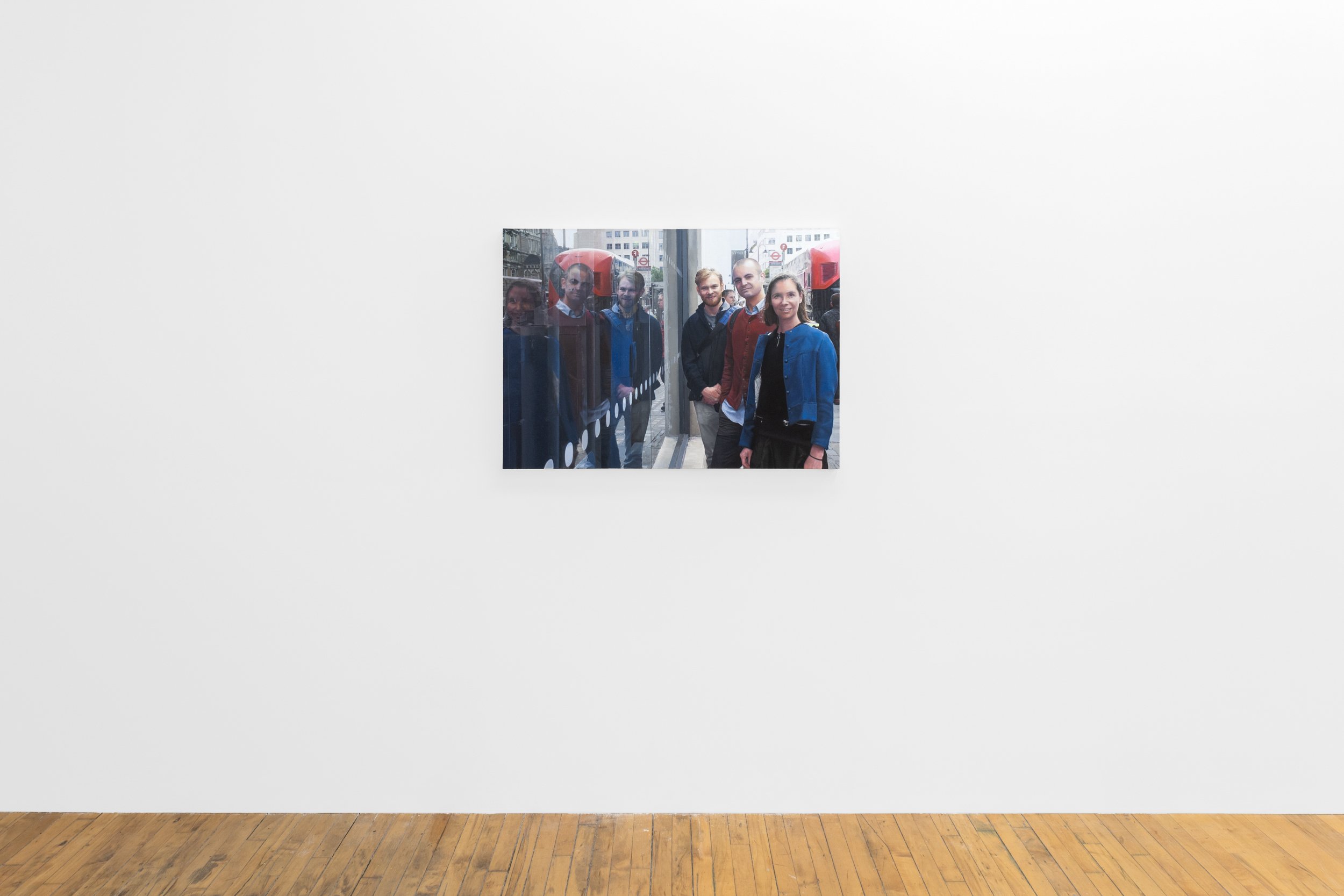
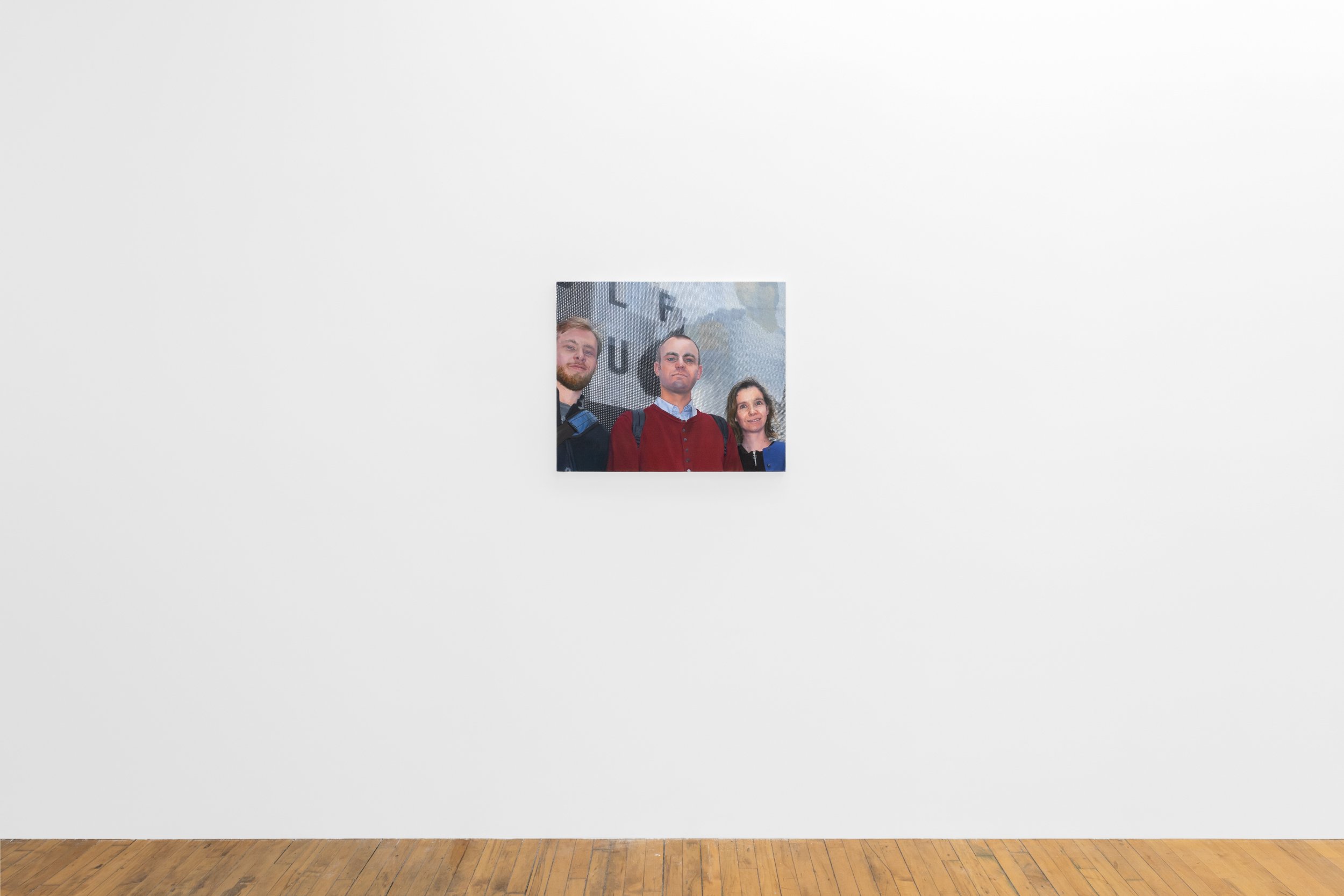
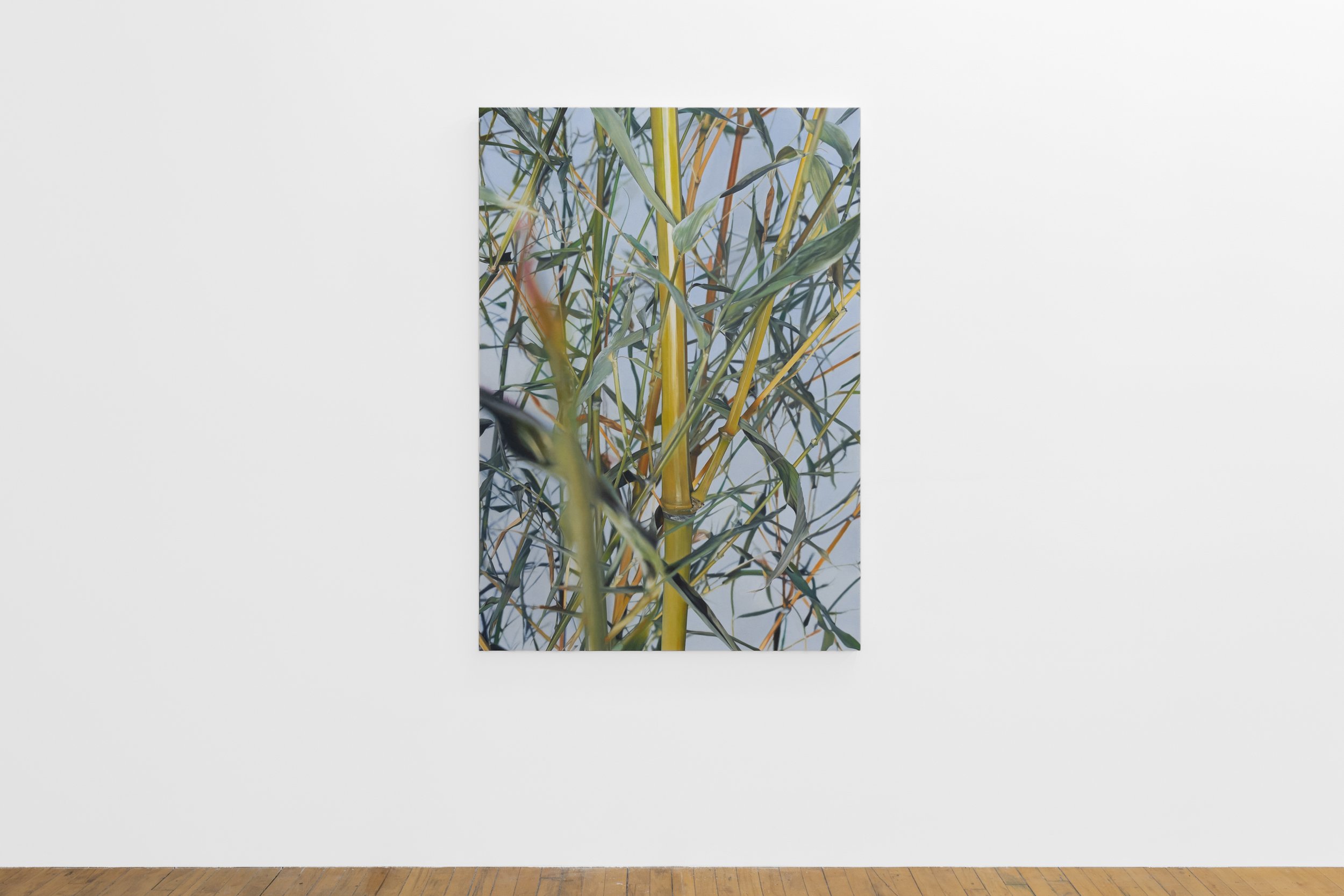
Alan Michael is similarly concerned with perception and the place that images occupy within a culture of instability. In Michael’s work, fidelity and legibility seem to function only insofar as signifiers which allow a spectator to comprehend the social conditions which have led to the painting’s creation. In other words, the very nature of how Michael realistically renders his “proxy images” points to (and is indicative of) the conditions of labor, visibility, and socialized perception that enabled their making in the first place. The trio of friends depicted in two of his paintings on view are thus themselves a proxy for any number of social scenes and the intricate dynamics they facilitate, embody, and perpetuate. By exaggerating detail while stripping away context, Michael subtly manipulates our compulsion to assign meaning, value, and narrative to images. We are then confronted not by a vacuous, mimetic rendition of the surface world we inhabit, but by a societal structure within which we are already (perhaps unconsciously) situated, one which precisely determines our understanding and interpretation of these images with which we are inundated daily.
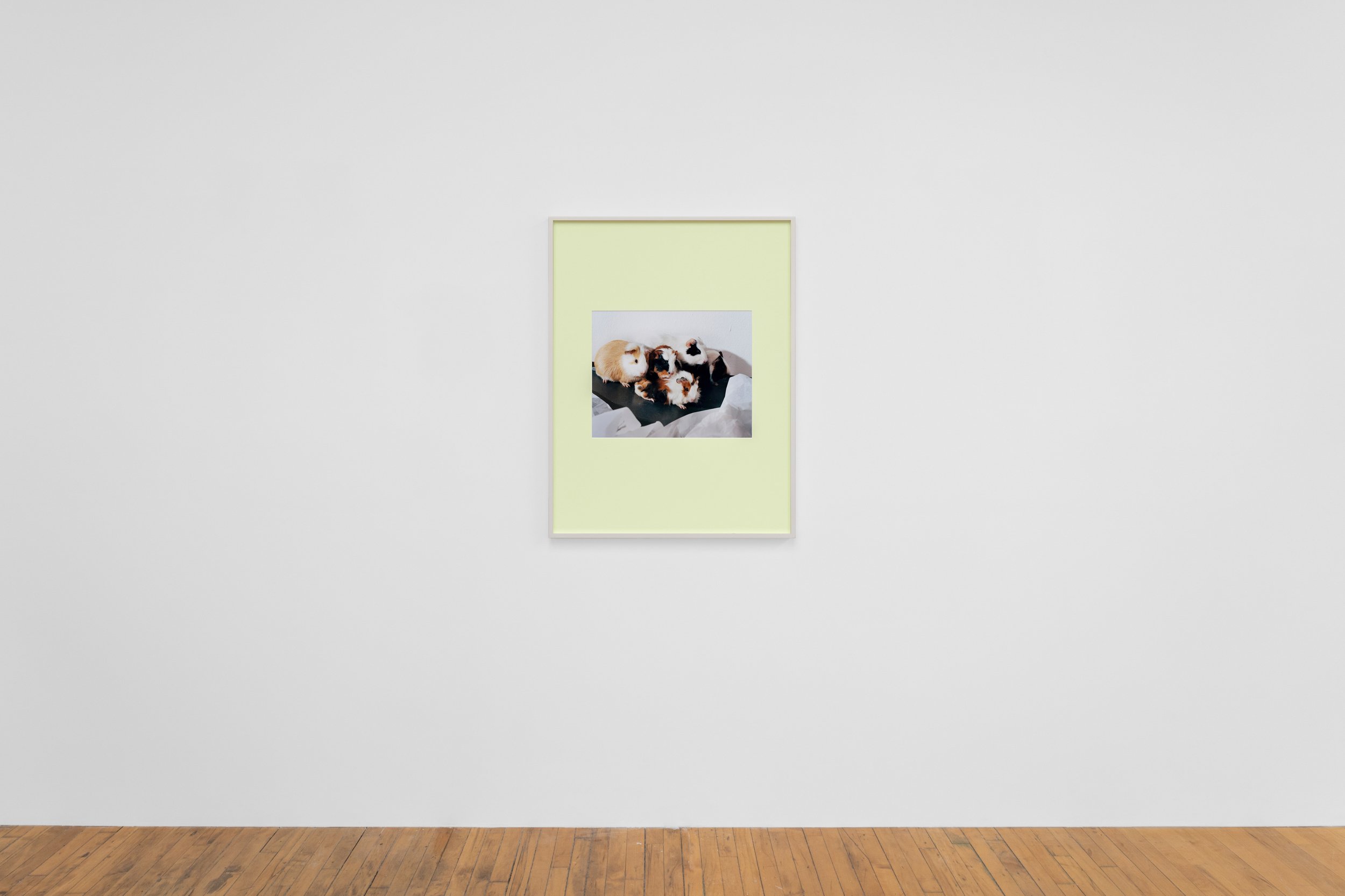
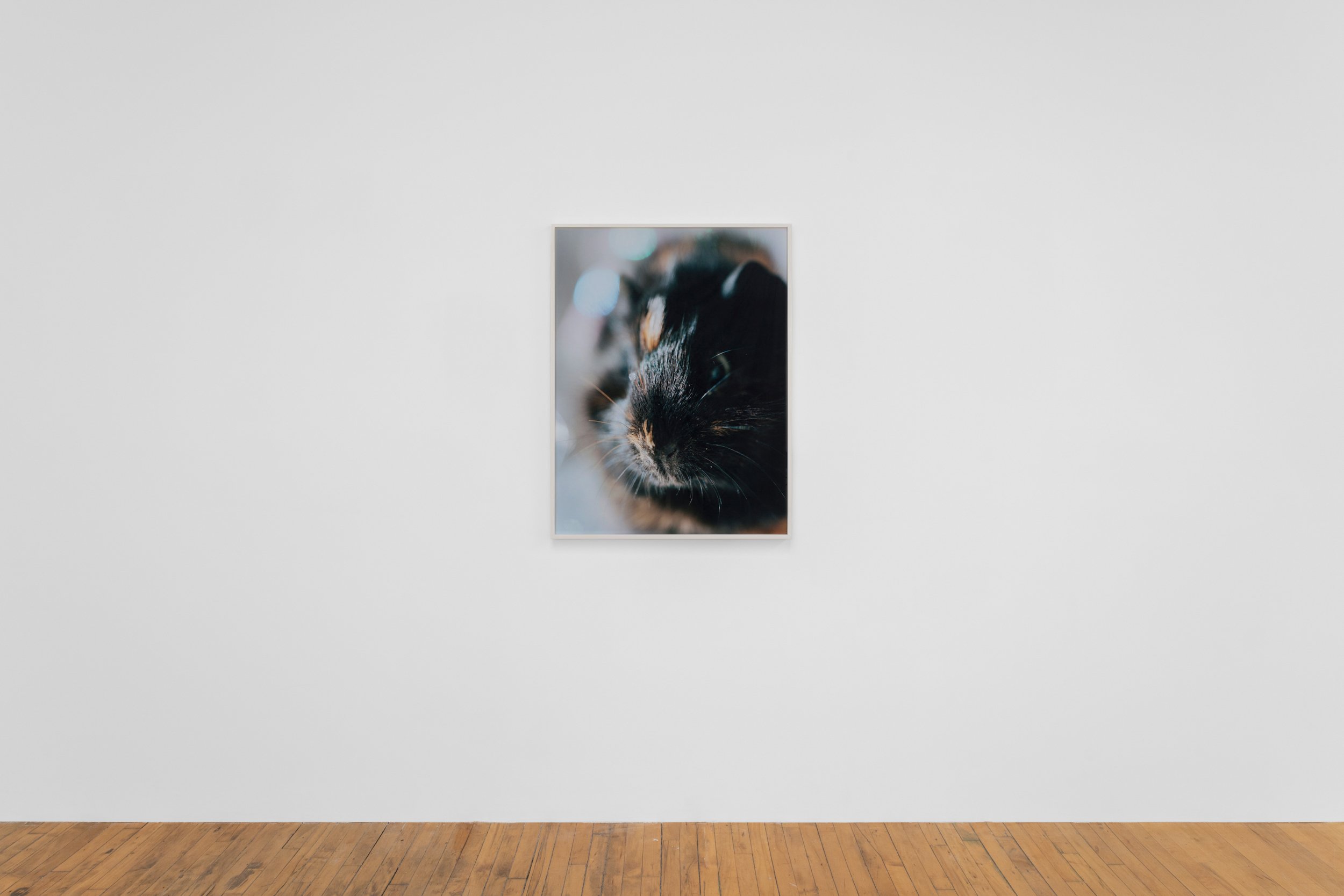
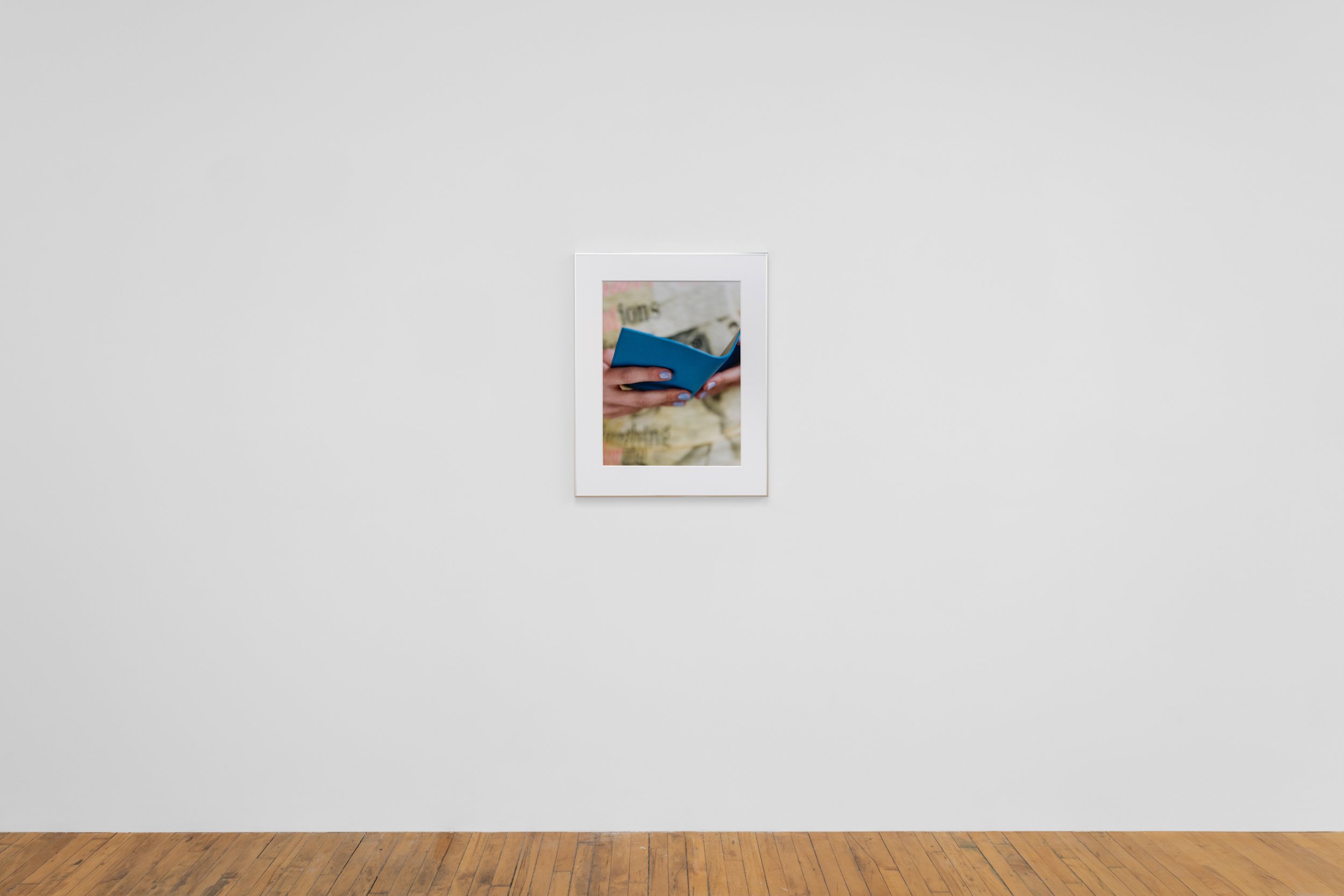
Josephine Pryde explores the conditions of image making and the effect that modes of display have on our unconscious reception of them. Pryde takes advantage of the iconographic and linguistic potential of images in tandem with their ever apparent (and at times confrontational) visual appeal. Her embrace and exploitation of seriality and the aesthetic codes of commercial photography (i.e. fashion, product, stock) elude immediate interpretation while also suggesting a broader analytical framework that undergirds her work. To identify with the expressionless guinea pigs in these portraits is to indict oneself; to be stirred by Pryde’s emotive and meticulous staging is a further confession. Within these works we witness the reciprocal and simultaneous technological and biological processes which generate and interpret images. There is a reflexive nature at play between the apparatus of photography and the ocular system of the viewer, each of which are intrinsically bound up in conversations of inscription, translation, and projection. In many ways, and much like Havekost’s paintings, Pryde’s images seem to exist in a space between (or perhaps beyond) perception and cognition. She adroitly occupies this space, situating her images within a dissociative yet decidedly critical locus.
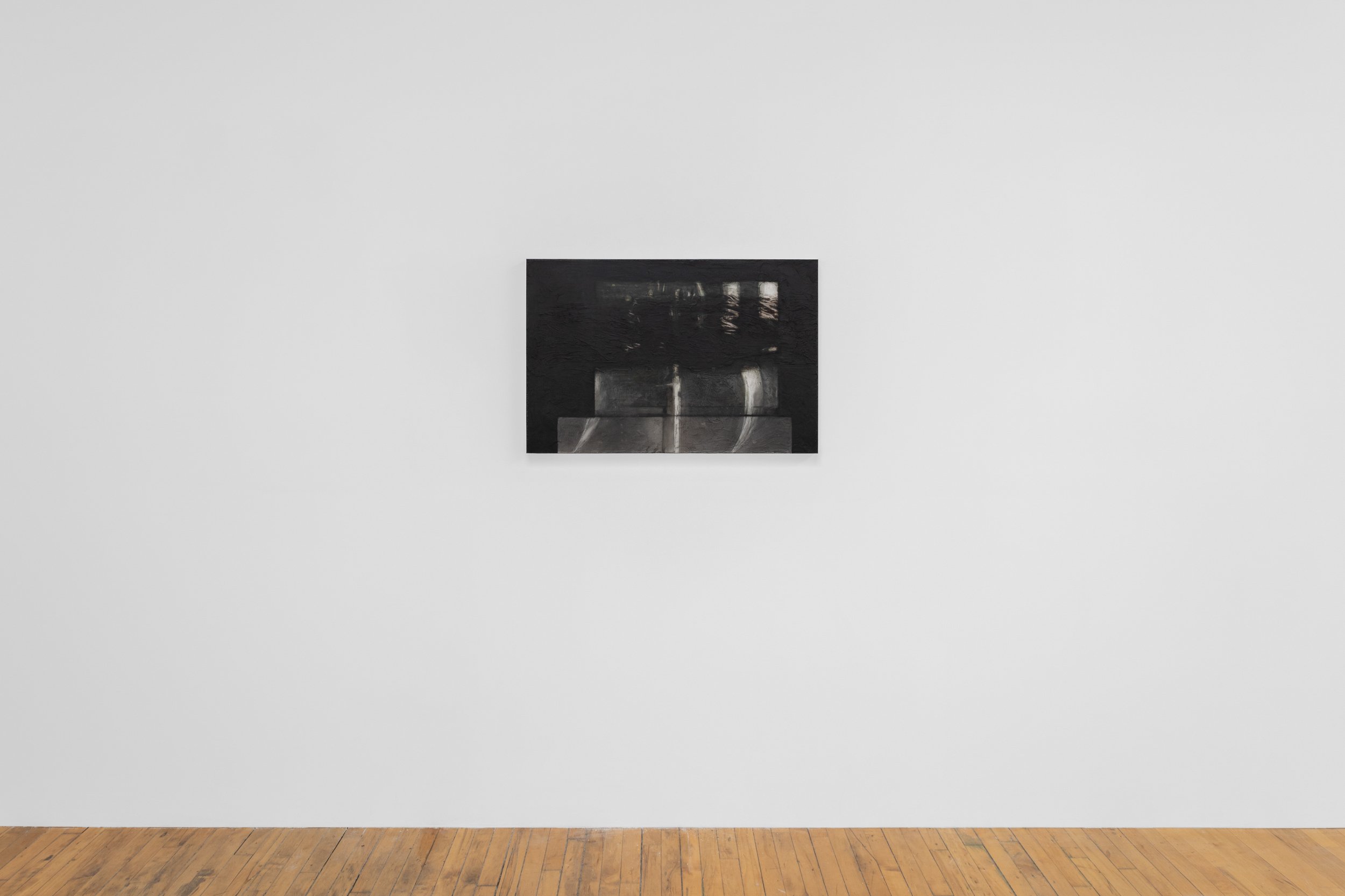
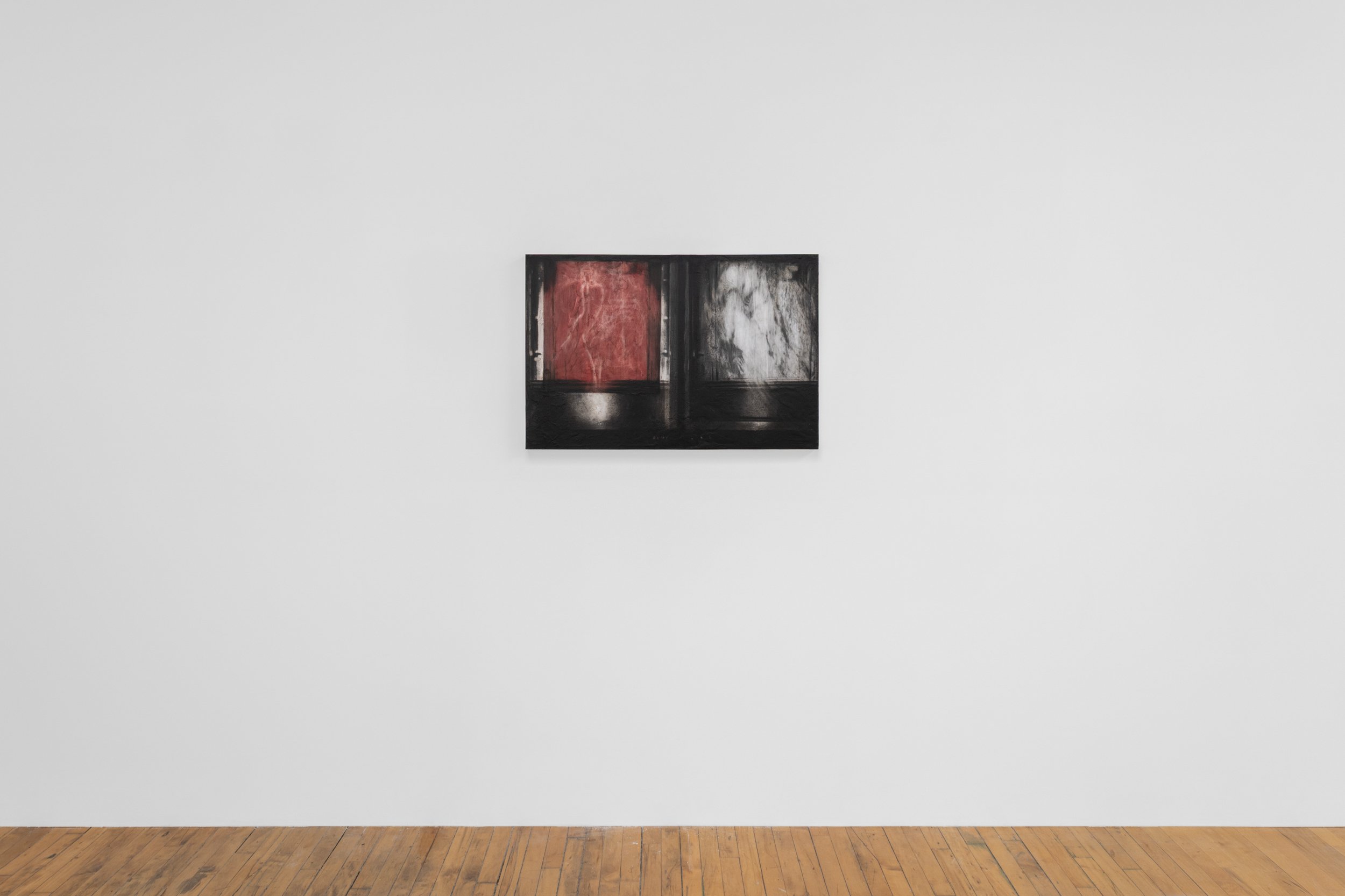
Raha Raissnia’s paintings, drawings, and films also maintain a self-reflexive relationship, adopting subtle cues while also physically bleeding into one another. Raissnia’s paintings are constantly informed by her filmic and photographic work in not only their content and form, but also by the very nature of their creation. Often developed through a prolonged series of direct exposure or transfer, elimination, negation, and modification, the images from which her drawings and paintings arise undergo numerous stages of transformation before their eventual display. In doing this, Raissnia considers the inarticulable and imperceptible qualities of image production through physical intervention. Images are layered and suspended within one another as the process of construction itself becomes yet another elusive act, hindering any holistic perception or interpretation. This layering of imagery also alludes to the “paradoxical structure” of film: that is, how film creates the illusion of movement through the rapid, successive perception and manipulation of stillness. Raissnia upends this linearity and compresses the durational element of film into a flat, material expression of time. This negation complicates not only the position that film holds within Raissnia’s practice, but also the autonomy of images and our ability to comprehend them.
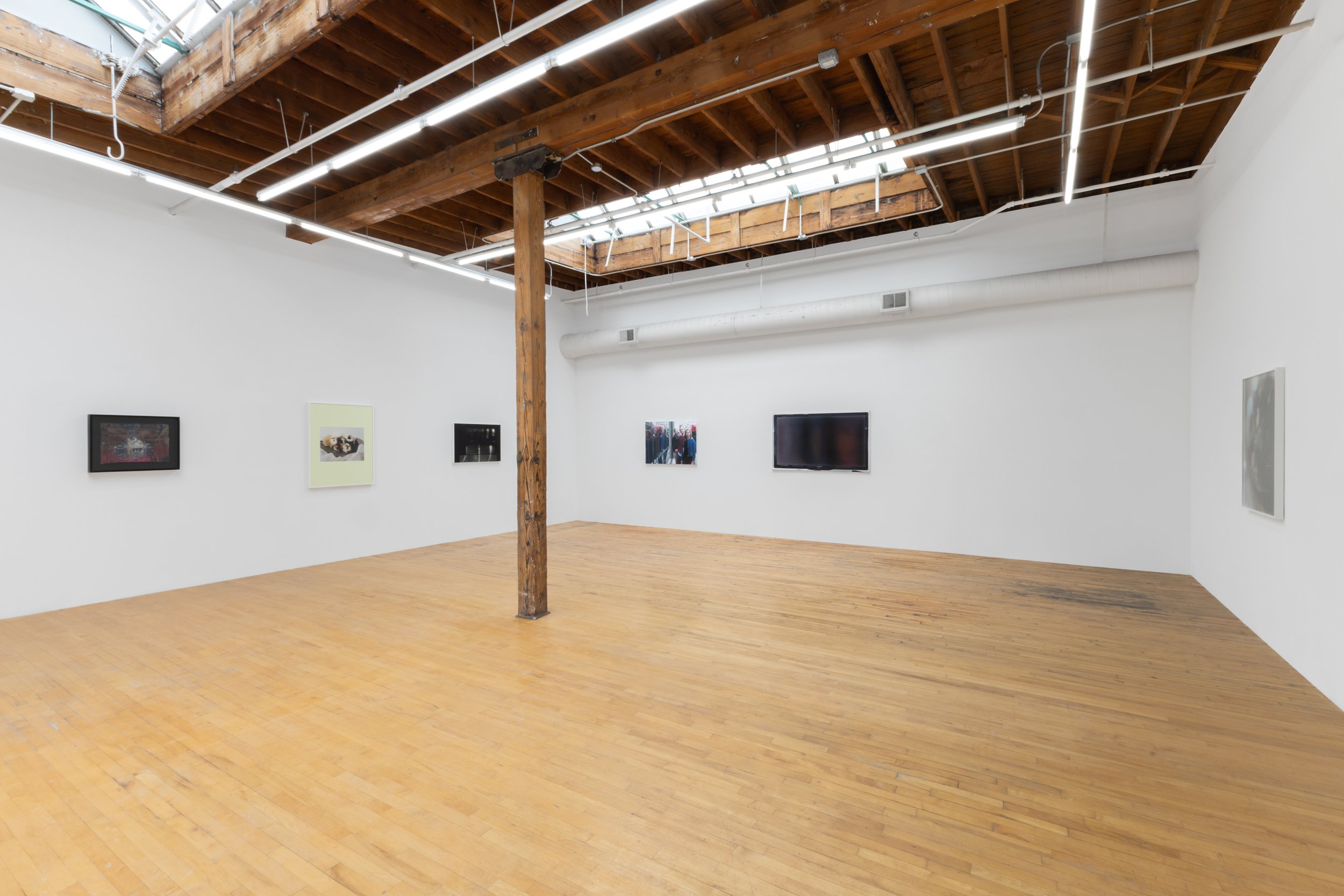
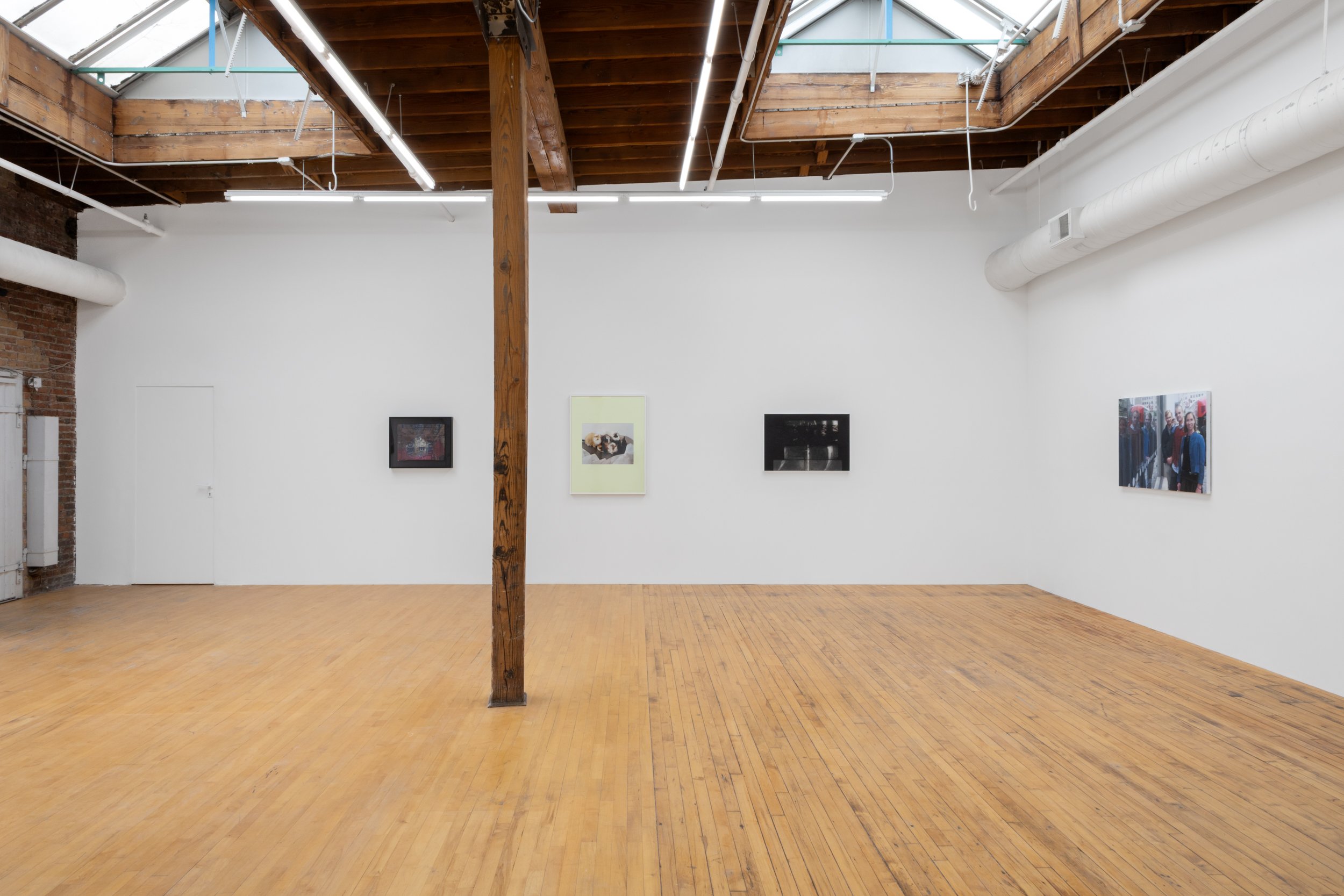
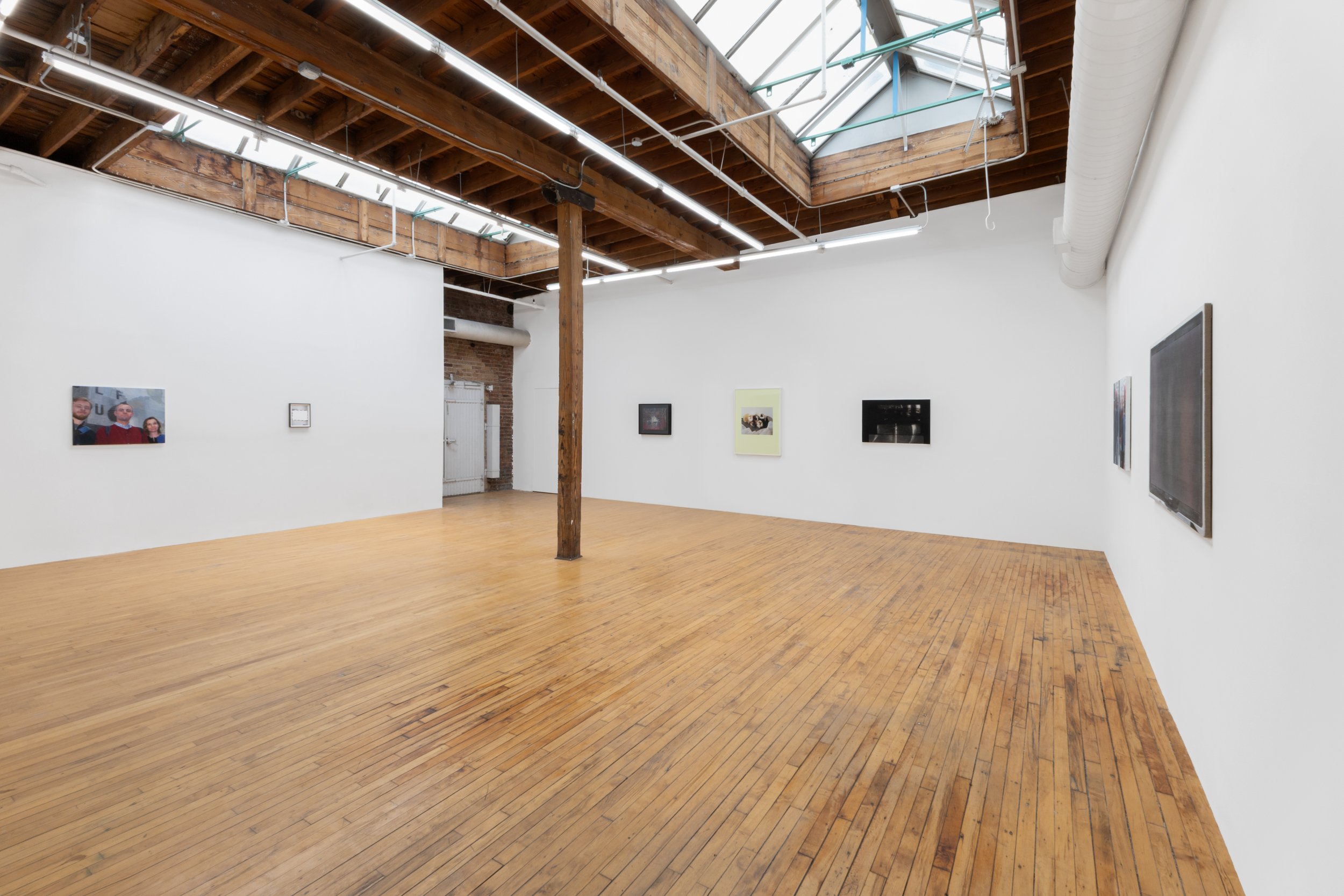
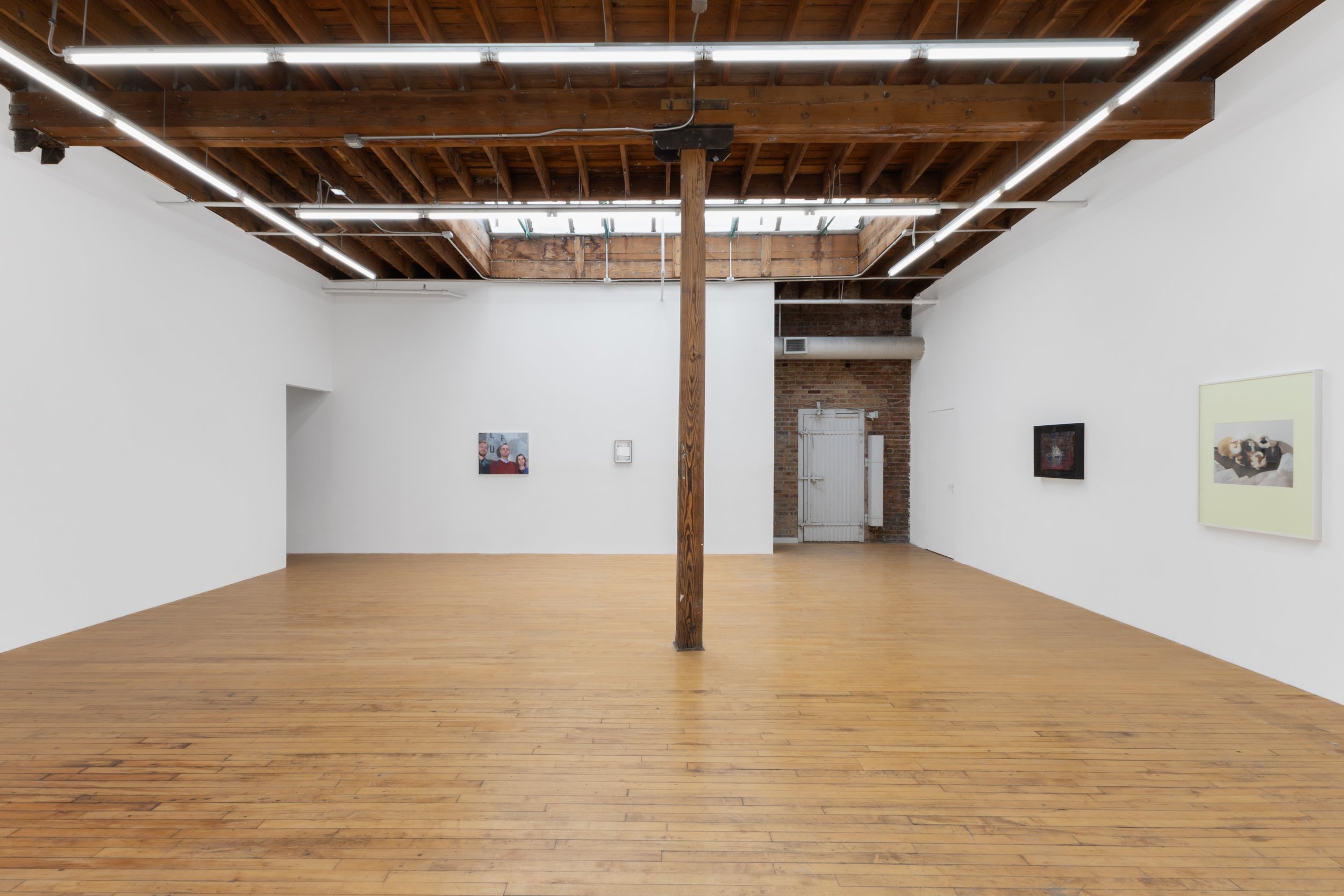


Taro Masushio Untitled (CB #14), 2024 UV print on found cardboard 25 5/8 x 26 1/4 x 2 7/8 inches 65.1 x 66.7 x 7.3 cm
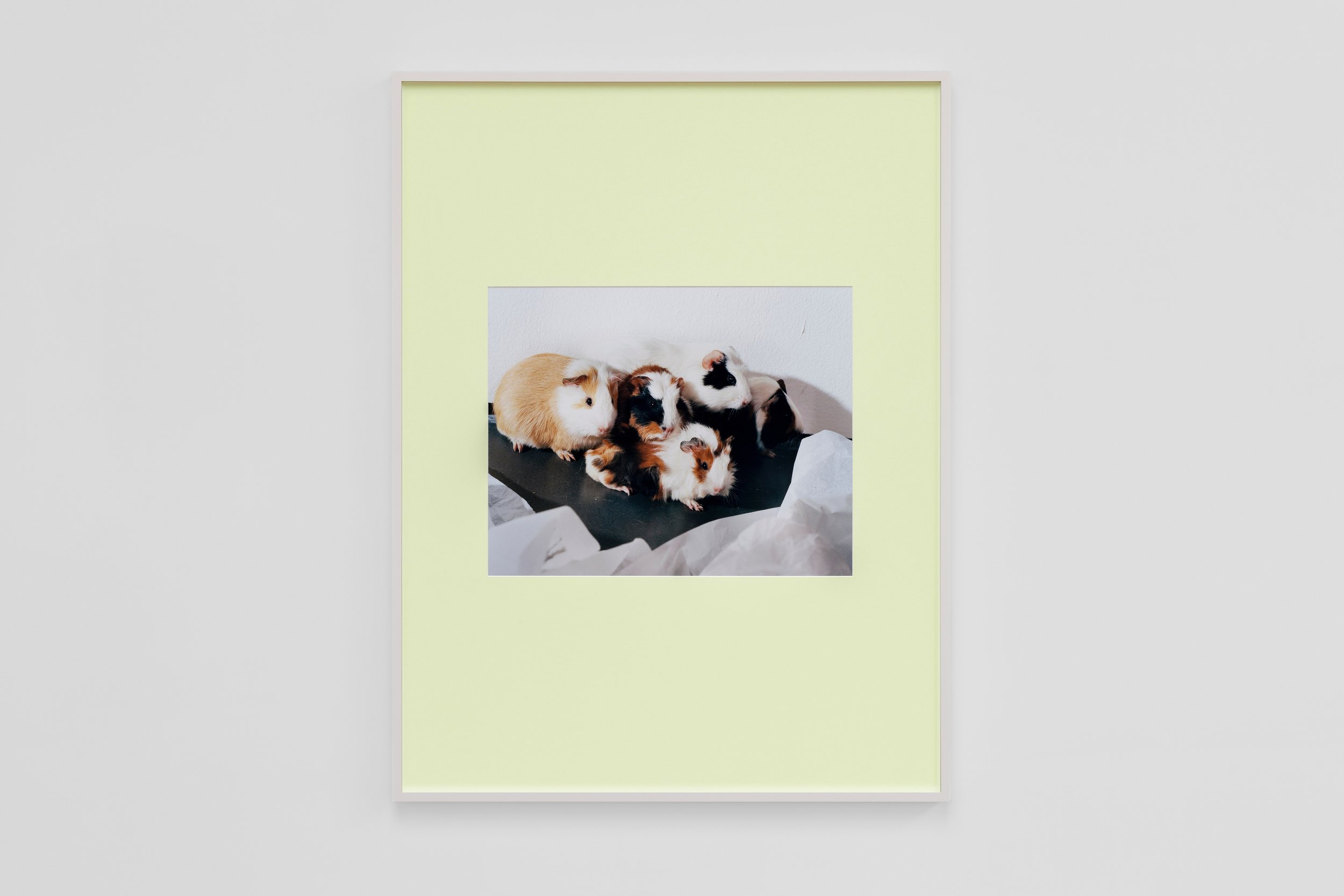
Josephine Pryde SCALE XXXVI (36), 2012 Chromogenic print 41 3/4 x 31 7/8 inches (framed) 106 x 81 cm (framed) Edition 3 of 3 + 2 AP
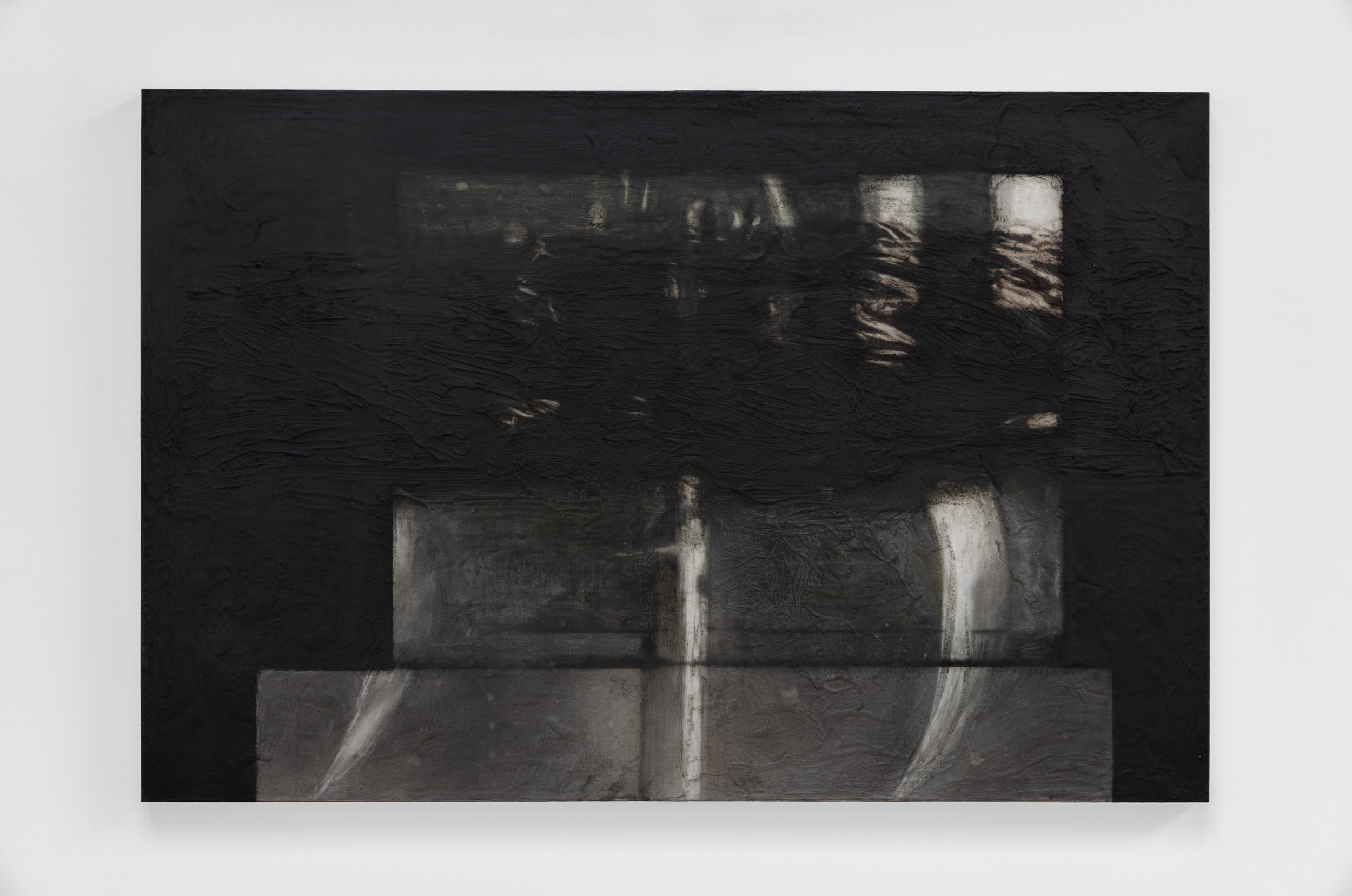
Raha Raissnia Untitled, 2018 Oil, pigment, gel medium, graphite on wood 24 x 36 inches 61 x 91.4 cm
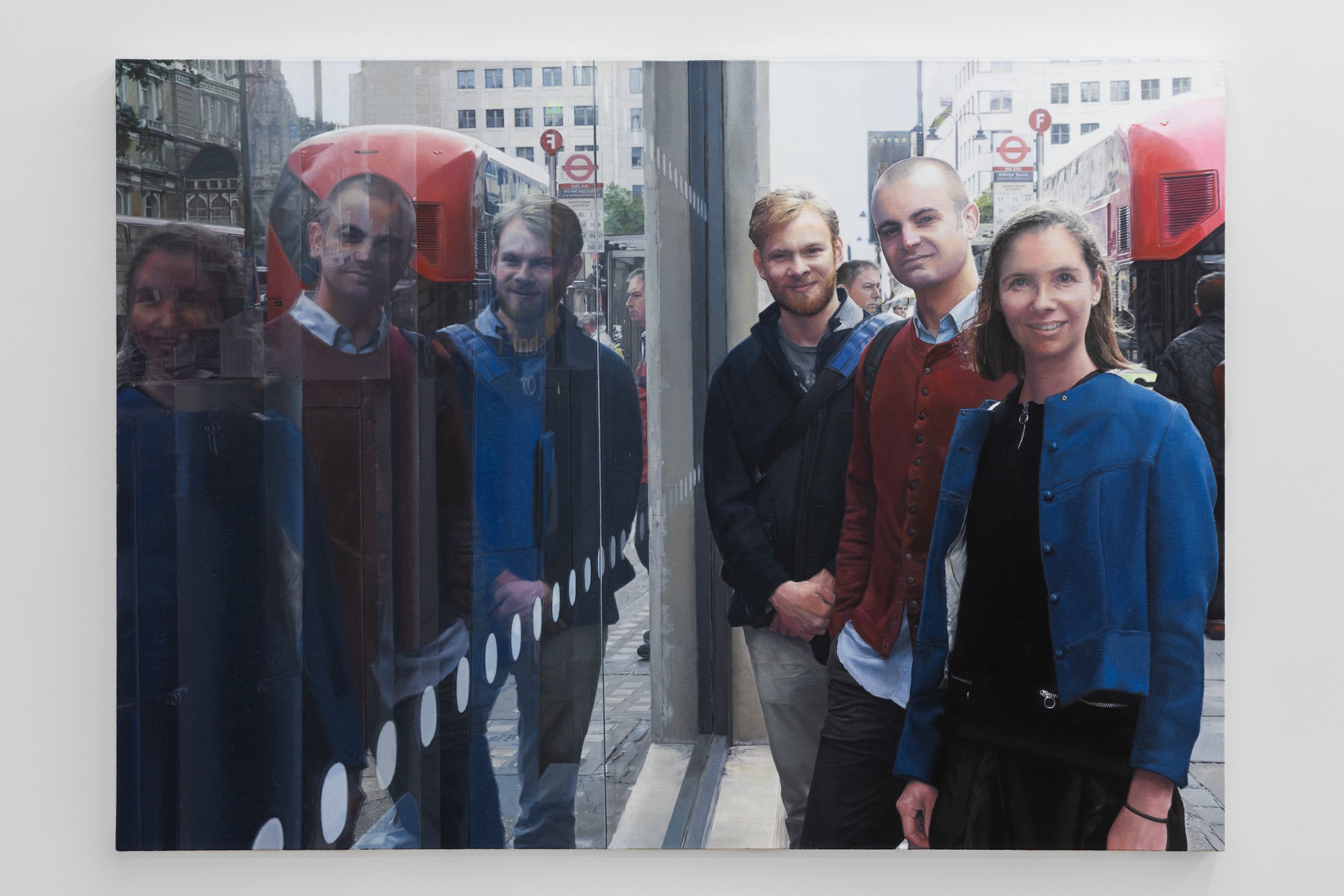
Alan Michael 2010-2011: Expansion, 2018 Oil on canvas 29 1/2 x 41 inches 75 x 105 cm
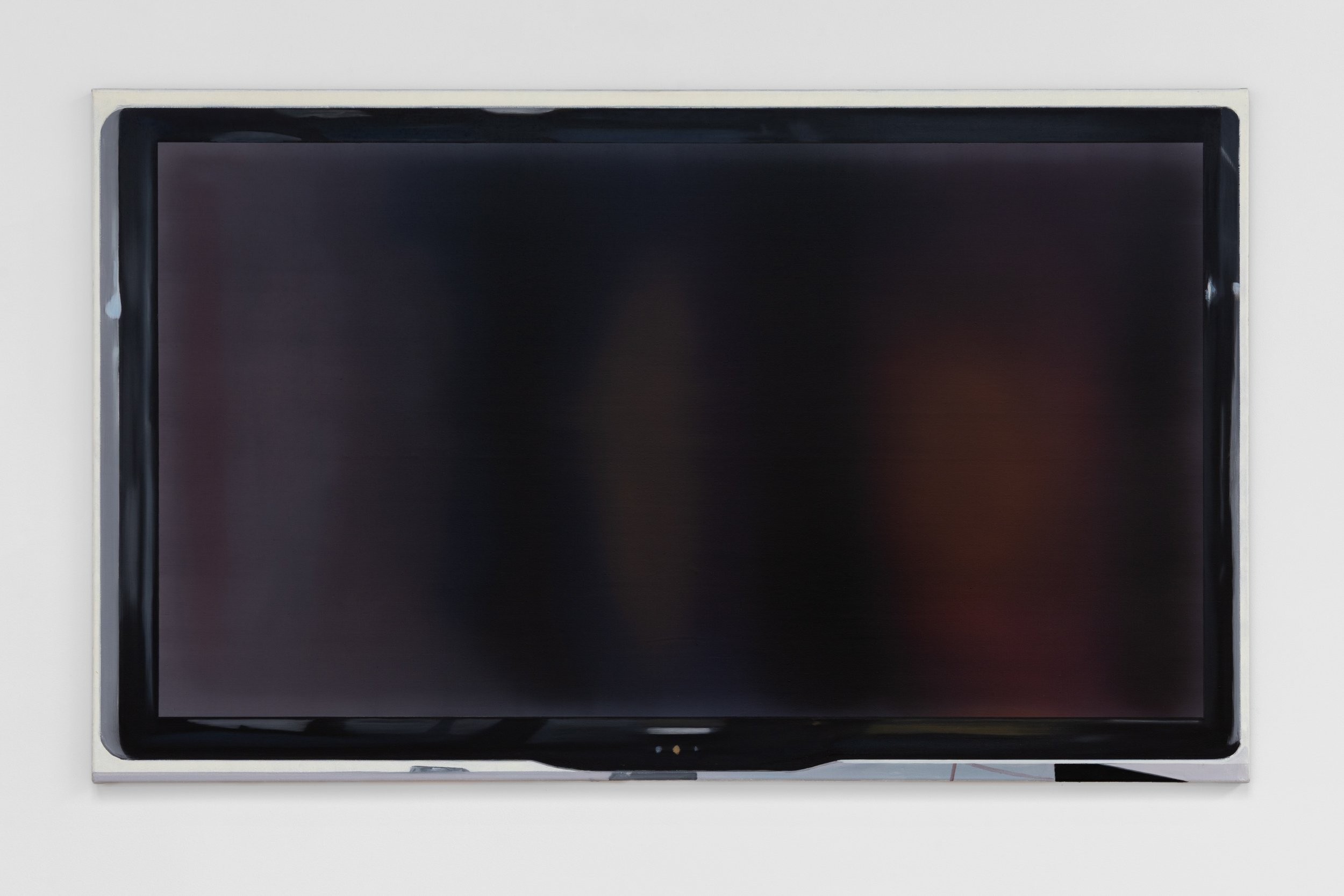
Eberhard Havekost Flatscreen, 2012 Oil on canvas 35 1/2 x 59 inches 90 x 150 cm
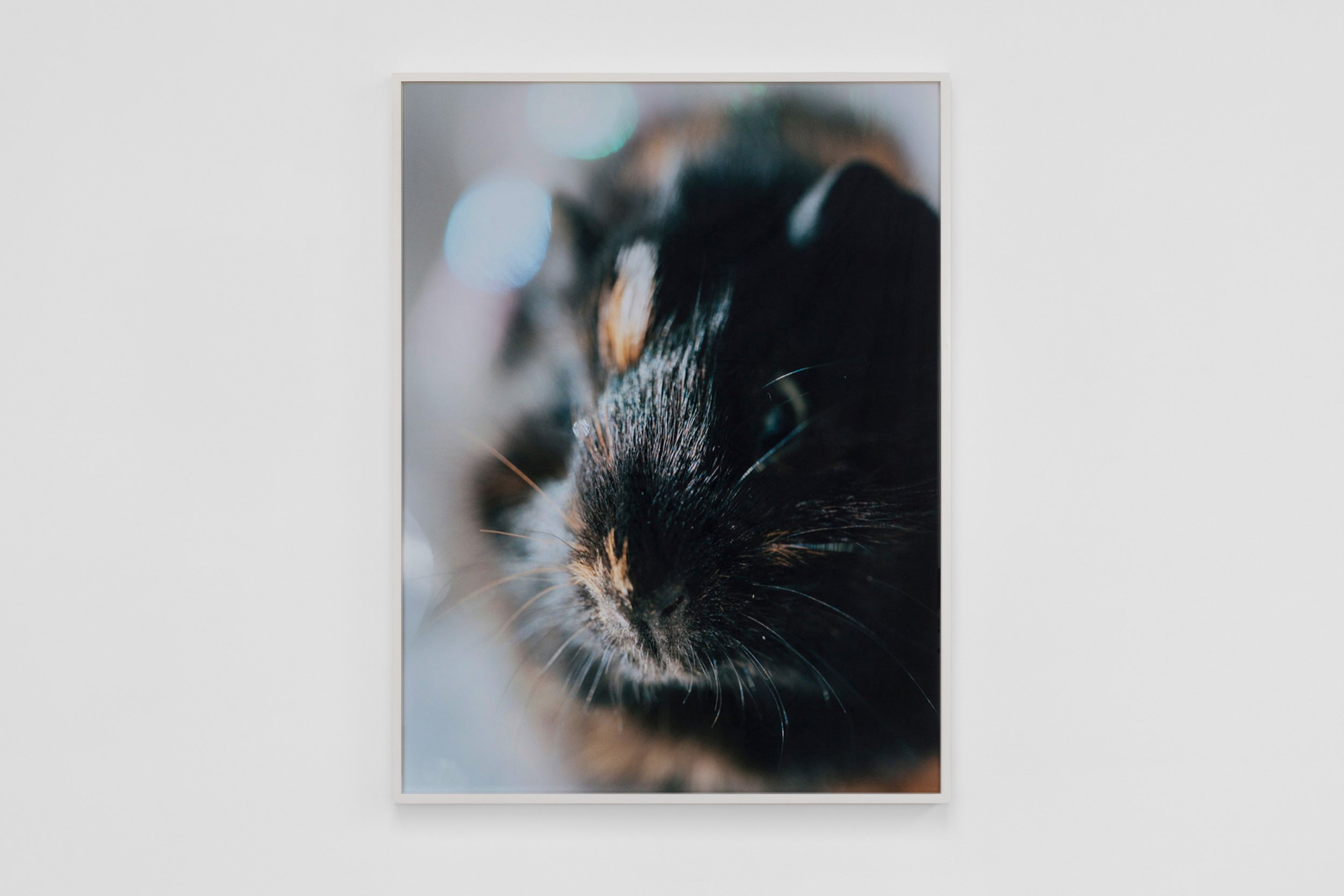
Josephine Pryde SCALE XIV (14), 2012 Chromogenic print 41 3/4 x 31 7/8 inches (framed) 106 x 81 cm (framed) Edition 3 of 3 + 2 AP
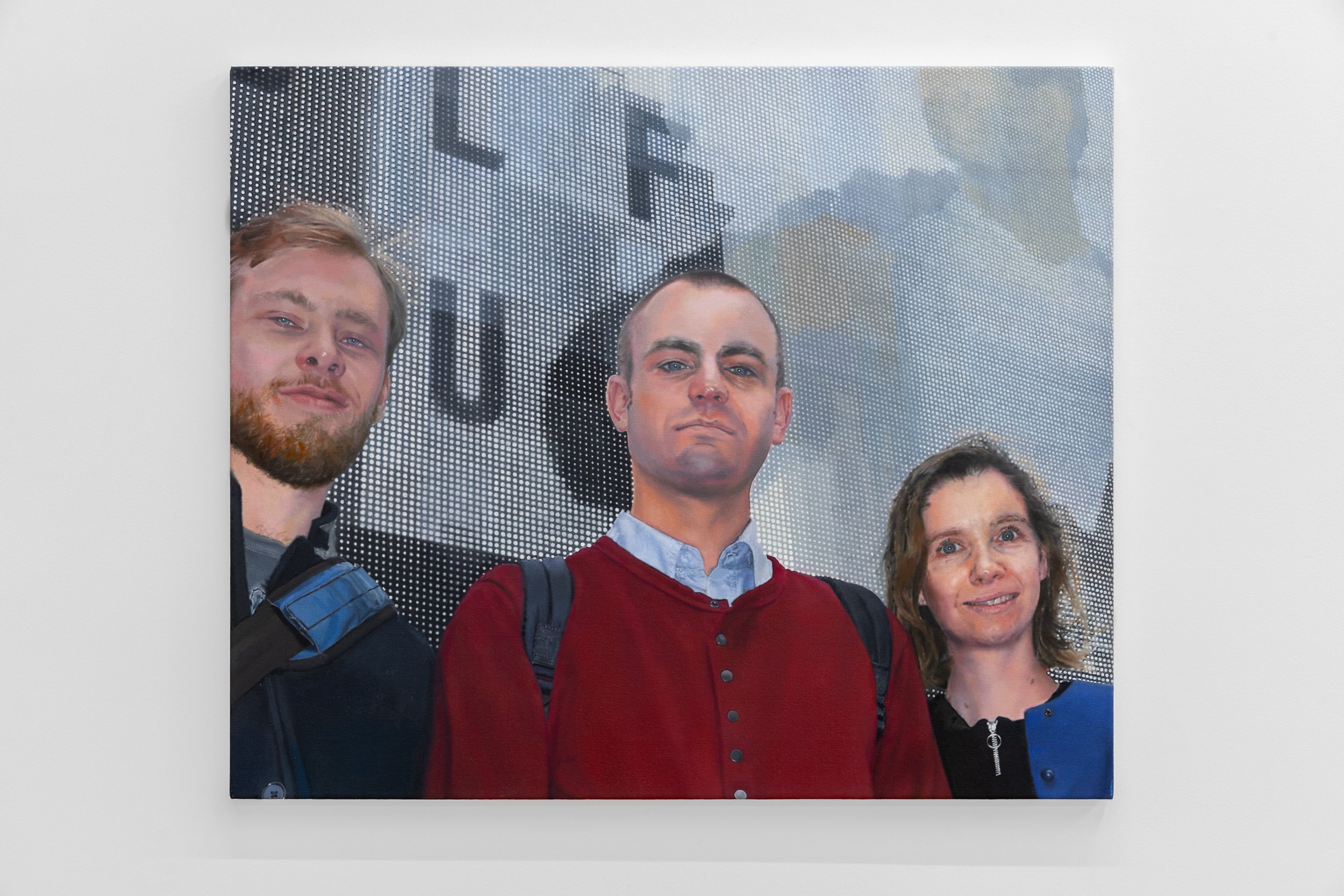
Alan Michael Dimensions, 2019 Oil on canvas 24 3/8 x 29 1/2 inches 62 x 75 cm
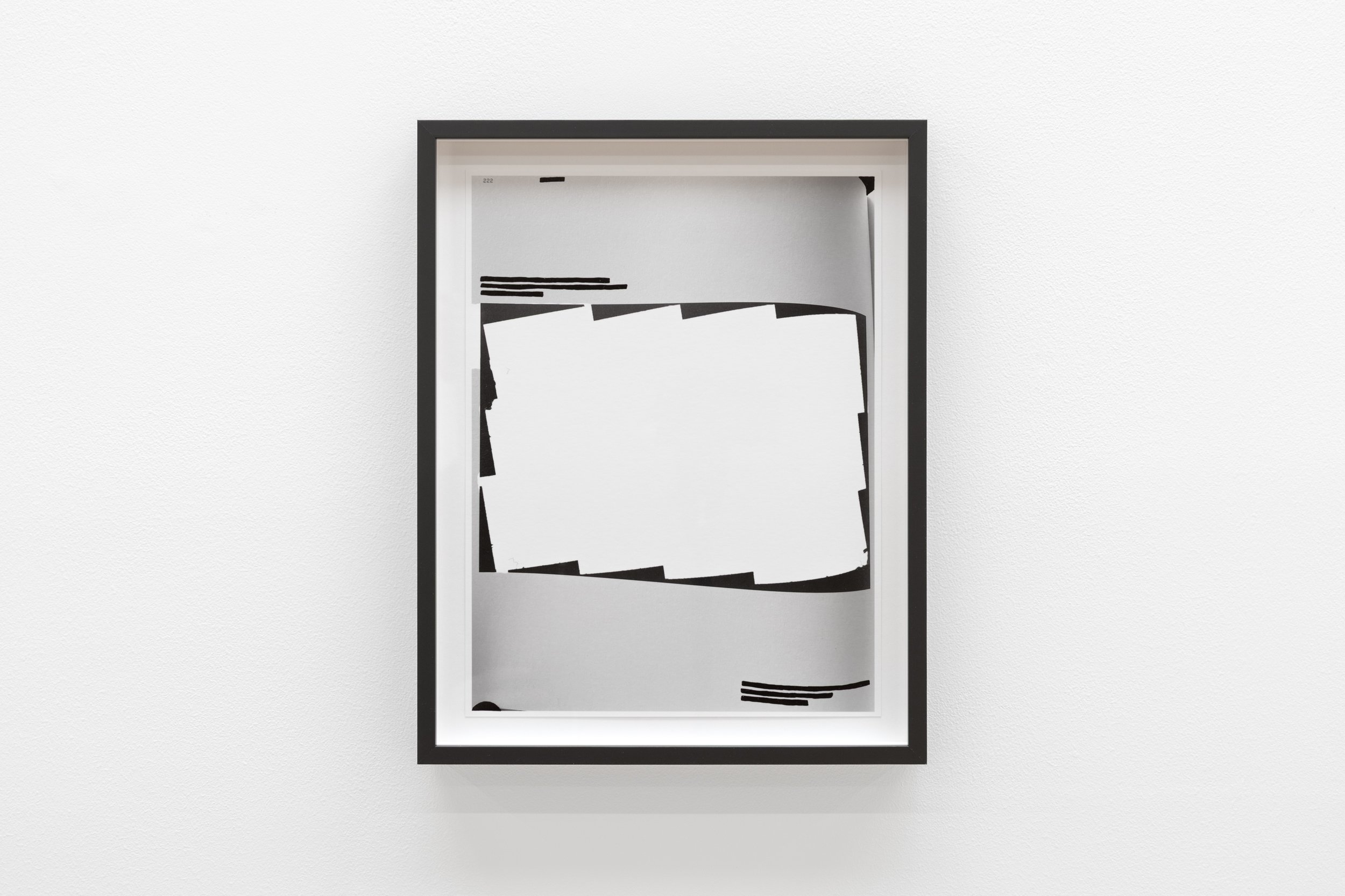
Taro Masushio Untitled (Folio/Pulse), 2025 India ink on pigment print 12 3/4 x 10 inches (framed) 32.4 x 25.4 cm Edition 2 of 2 + 1 AP (each unique)
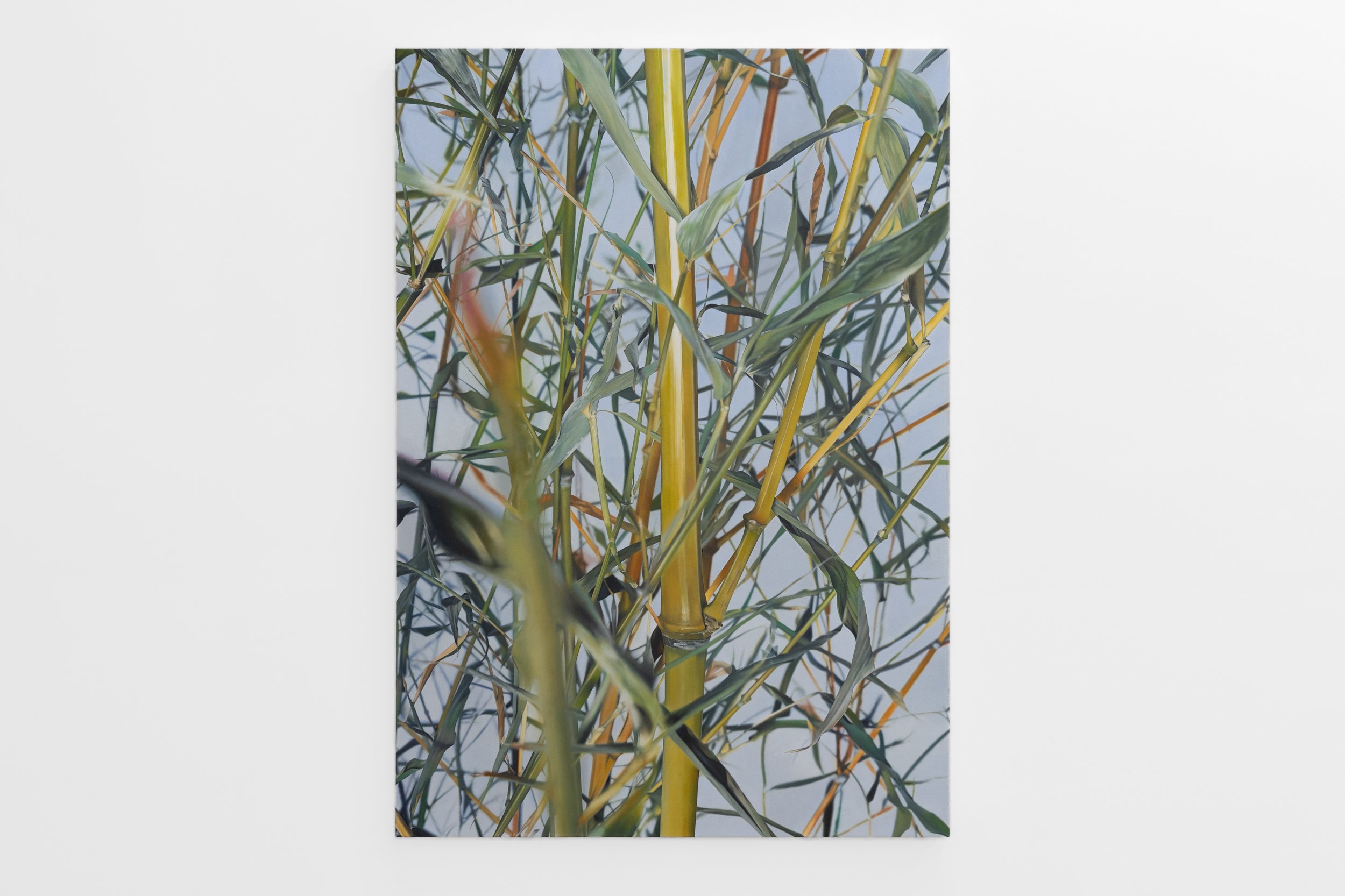
Alan Michael A home to outsiders of all kinds with their parties their label, 2025 Oil on canvas 57 x 40 1/8 inches 145 x 102 cm
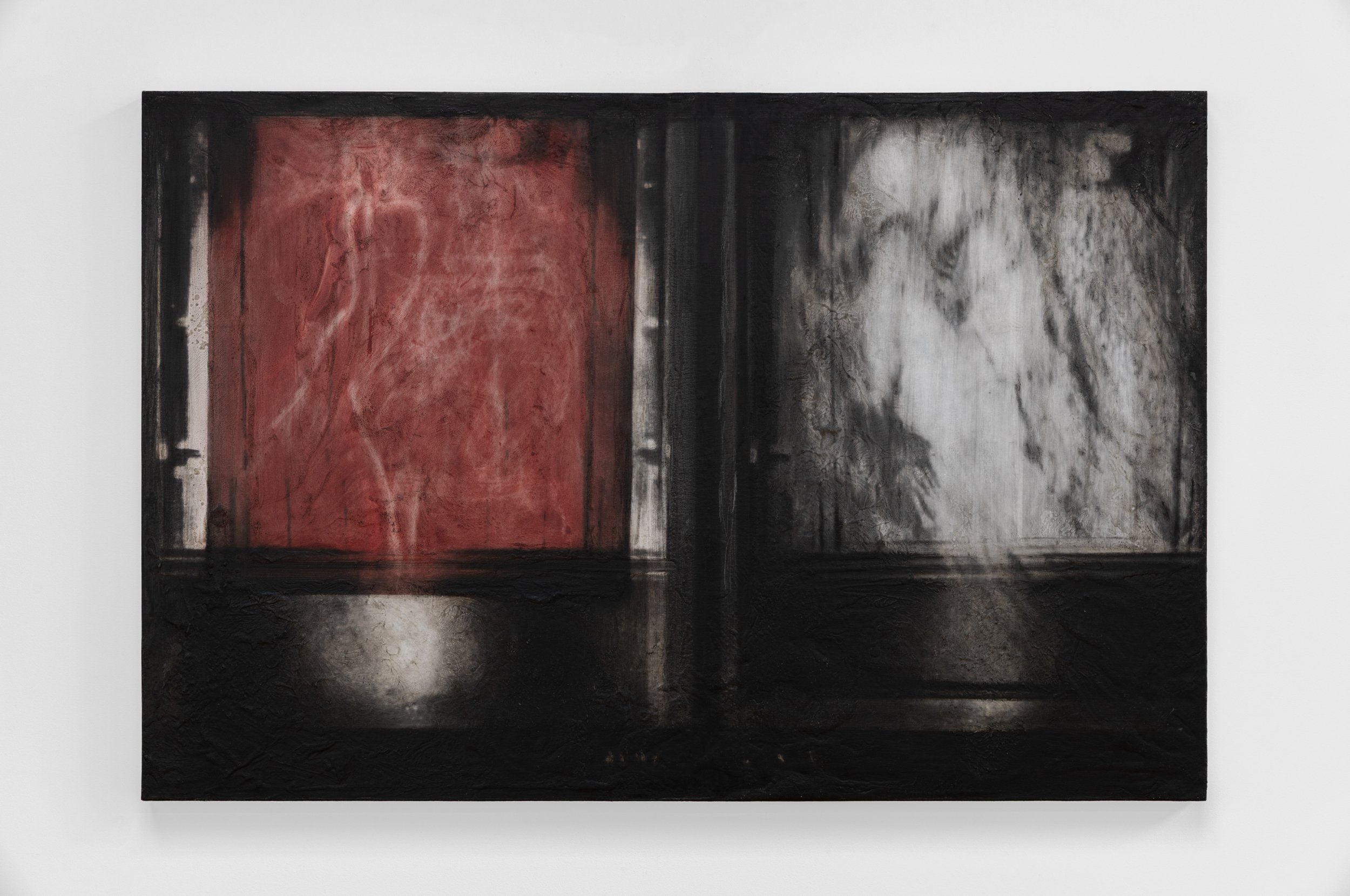
Raha Raissnia Untitled, 2018 Oil, pigment, gel medium, graphite on wood 24 x 36 inches 61 x 91.4 cm
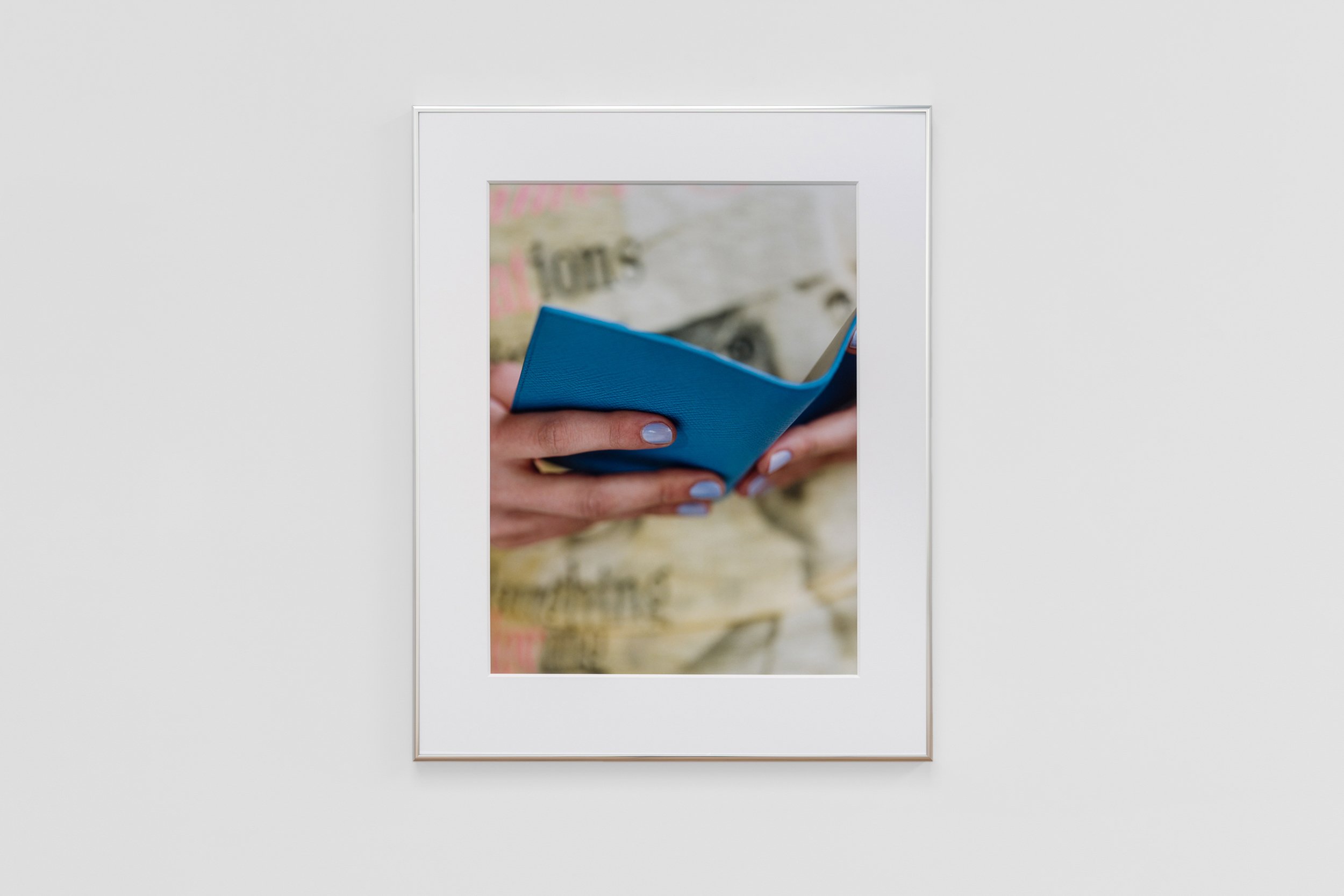
Josephine Pryde Gift For Me, Simon Lee Gallery Christmas 2014 (1), 2015 Chromogenic print 31 1/8 x 24 5/8 inches (framed) 79.2 x 62.7 cm (framed) Edition 3 of 3 + 2 AP
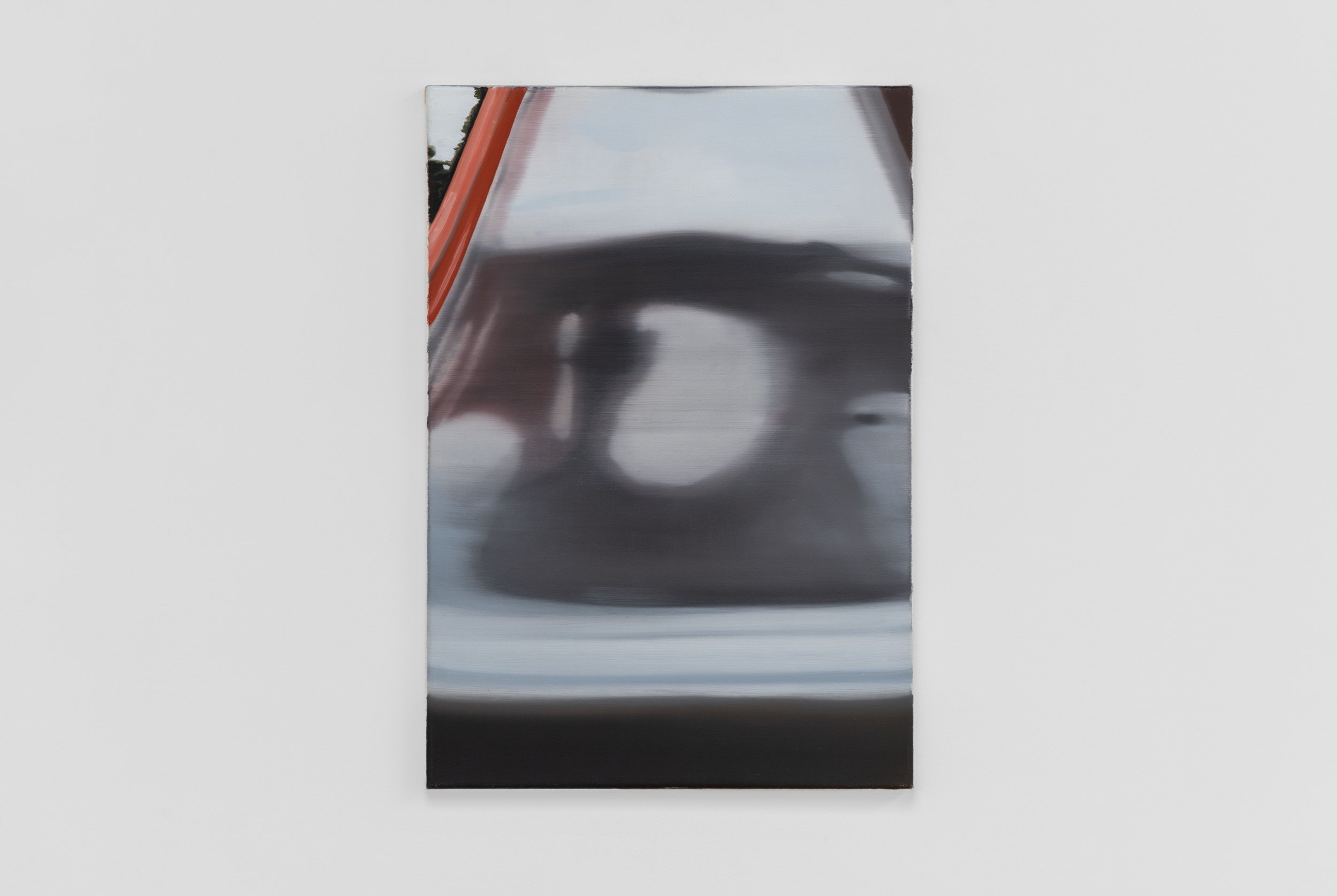
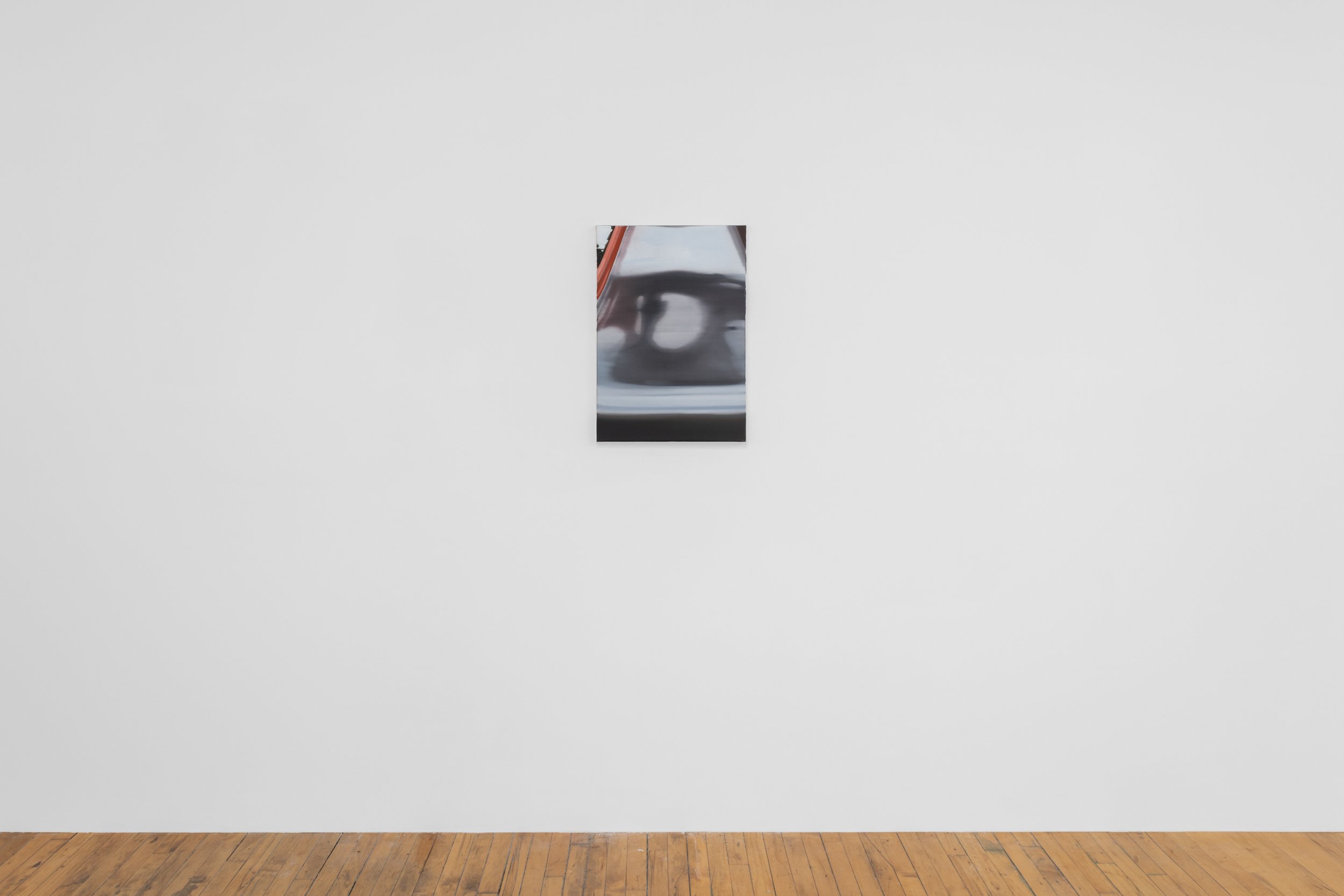
Eberhard Havekost Rutsche 2 (Slide 2), 2002 Oil on canvas 25 3/8 x 17 3/4 inches 65 x 45 cm
Eberhard Havekost (b. 1967, Dresden, Germany; d. 2019, Berlin, Germany) was a German artist living and working between Dresden and Berlin. He studied at the Hochschule für Bildende Künste, Dresden and was a professor at the Kunstakademie Düsseldorf. Selected solo and two-person exhibitions include Contemporary Fine Arts, Berlin (2024, 2019); Roberts Projects, Los Angeles (2024); Galerie Gebr. Lehmann, Dresden (13x, 1995-2024); Anton Kern Gallery, New York (11x, 1998-2023); White Cube, London (2013, 2010, 2007, 2003); Museum Küppersmühle, Duisburg (2013); Galerie Hussenot, Paris (2013, 2009, 2004); Brandenburgischer Kunstverein, Potsdam (2012); Bhau Daji Lad Museum, Mumbai (2012); Museum der Moderne Salzburg (2012); Kunstverein Augsburg (2012); Roberts & Tilton, Culver City (2011, 2005); Schirn Kunsthalle, Frankfurt am Main (2010); Staatliche Kunstsammlungen Dresden (2010); Stedelijk Museum, Amsterdam (2006); Kunstmuseum Wolfsburg (2005); Kupferstich-Kabinett, Dresden (2004); Rubell Family Collection, Miami (2004); Centre d’ Art Contemporain, Cajarc (2003); Museu Serralves, Porto (2001); University at Buffalo Art Gallery, Buffalo (2000); Kunsthalle Luckenwalde (1999); Galerie für Zeitgenossische Kunst Leipzig (1999); Kulturwissenschaftliches Institut, Essen (1999); and Kunstmuseum Luzern (1998), among others.
Selected group exhibitions include Société, Berlin; Kunstmusum Wolfsburg; Aishti Foundation, Beirut; Städtische Galerie, Dresden; Museum für Moderne Kunst, Berlin; Staatliche Kunstsammlungen, Dresden; Museum der bildenden Künste, Leipzig; KAI 10 Arthena Foundation, Düsseldorf; Kunsthalle Emden; Kunstmuseum Luzern; Deichtorhallen Hamburg; the Hall Art Foundation, Reading; Wexner Center for the Arts, Columbus; Museum der Modern Salzburg; Martin-Gropius-Bau, Berlin; Musée Granet, Aix-en-Provence; Museum Frieder Burda, Baden-Baden; Kunsthalle Düsseldorf; Hessel Museum of Art, CCS Bard, Annandale-on-Hudson; Städel Museum, Frankfurt am Main; Albertinum, Dresden; City Art Museum Helsinki; FRAC Auvergne, Clermont-Ferrand; Hamburger Bahnhof, Museum für Gegenwart, Berlin; Museum of Contemporary Art, Chicago; Sammlung Goetz, Munich; Walker Art Center, Minneapolis; and Neuer Berliner Kunstverein, Berlin, among others.
His work is held in the permanent collections of Harvard Art Museums, Cambridge; Museum of Contemporary Art, Los Angeles; Museum of Modern Art, New York; Rubell Family Collection, Miami; Stedelijk Museum, Amsterdam; Neue Nationalgalerie im Hamburger Bahnhof, Berlin; Sammlung des Bundes, Bonn; Kunstmuseum Dieselkraftwerk, Cottbus; Denver Art Museum; Kupferstich-Kabinett und Galerie Neue Meister, Staatliche Kunstsammlungen, Dresden; Kunstfonds des Freistaates Sachsen, Dresden; Städel Museum, Frankfurt; Neue Galerie am Landesmuseum Joanneum, Graz; Essl Museum, Klosterneuburg; Galerie fur Zeitgenössische Kunst, Leipzig; Museum der Bildenden Kunste, Leipzig; Tate Modern, London; The Saatchi Collection, London; Kunstmuseum, Luzern, Germany; Sammlung Goetz, Munich; Staatliche Graphische Sammlung, Munich; Porto Museu Serralves – Museu de Arte Contemporânea, Portugal; Kunstmuseum Wolfsburg; Kunsthaus Zürich; the Titze Collection, Paris; and Fine Arts Museums of San Francisco.
Taro Masushio (b. Japan) lives and works in New York City. He received his BA from UC Berkeley and MFA from New York University and has taught at both institutions. Solo exhibitions include Scheusal, Berlin (2025); Empty Gallery, Hong Kong (2024, 2020); BIS Center, Mönchengladbach (2023); and Ulrik, New York (2023). His work has also been featured in group exhibitions at Felix Gaudlitz, Vienna; Hordaland Kunstsenter, Bergen; Duddell's, Hong Kong; The Clemente Soto Vélez Cultural & Educational Center, New York; Bonner Kunstverein, Bonn; 47 Canal, New York; and Capsule, Shanghai, among others. Masushio was the 2022/23 City Artist in Residence at Internationales Atelier-stipendium Mönchengladbach. He is currently the Henry Wolf Chair in Photography at Cooper Union, New York.
Alan Michael (b. 1967, Glasgow, Scotland) lives and works in London. Selected solo and two-person exhibitions include Jenny's at Hot Wheels London, London (with Gili Tal, 2024); Jan Kaps, Cologne (2023, 2018); Jenny's, New York (2022); Halle für Kunst, Lüneburg (2021); High Art, Paris (2021, 2013); Le Bourgeois, London (2019); Cell Project Space, London (2018); LONDON, London (2015); Galleria ZERO..., Milan (2015); Tramway, Glasgow (2014); Vilma Gold, London (2014); 0HI0, Glasgow (2013); David Kordansky Gallery, Los Angeles (2011, 2007); HOTEL, London (2010, 2003); Galerie Micky Schubert, Berlin (2009, 2007); Sammlung Schürmann, Berlin (2008); Tate Britain, London (2008); Stuart Shave / Modern Art, London (2005); and Transmission Gallery, Glasgow (2002).
Selected group exhibitions include Schiefe Zähne, Berlin; Kölnischer Kunstverein, Cologne; Stadtgalerie Bern; Terminal, London; The Wig, Berlin; dépendance, Paris; Galerie Francesca Pia, Zürich; Wschód, Warsaw; Neuer Essener Kunstverein, Essen; Kunstraum Kesselhaus, Bamberg; Arcadia Missa, London; Frans Hals Museum, Haarlem; Christian Andersen, Copenhagen; Bonington Gallery, Nottingham Trent University, Nottingham; The British Council (traveled to CAC Vilnius, Lithuania; Limerick City Gallery of Art, Ireland; Aram Art Gallery, Goyang AramNuri Arts Centre, South Korea); Galerie Gregor Staiger, Zürich; Stems, Brussels; 3236RLS, London; Nottingham Contemporary; Artist's Institute, New York; Fiorucci Art Foundation, Stromboli; Mary Mary, Glasgow; CCA Andratx, Mallorca; CAPC, Museum of Contemporary Art, Bordeaux; Galleria ZERO..., Milan; Stuart Shave / Modern Art, London; Tate Britain, London; Roberts & Tilton, Los Angeles; and Deutsch Britische Freundschaft, Berlin, among others.
Josephine Pryde (b. 1967, Alnwick, UK) lives and works in Berlin. Selected solo and two-person exhibitions include Haus am Waldsee, Berlin (2024); CAC Synagogue de Delme, Delme (2023); the Art Institute of Chicago (2022); Reena Spaulings Fine Art, New York (2022, 2010, 2006, 2004); Gandt, New York (2022); Galerie Neu, Berlin (2020, 2007, 2001, 1996, 1995); Simon Lee Gallery, London (2018, 2012); Arnolfini, Bristol (2014); CCA Wattis, San Francisco (2015); Institute of Contemporary Art, Philadelphia (2015); Kunsthalle Bern (2012); Kunstverein Düsseldorf (2012); Chisenhale Gallery, London (2011); Secession, Vienna (2004); Galerie Christian Nagel, Cologne (2004, 2000, 1997); Galerie Bleich-Rossi, Graz (with Michael Krebber, 2002); Cabinet, London (with Katharina Wulff, 2002); and Kunstverein Braunschweig (2001), among others.
Selected group exhibitions include Institute of Contemporary Arts, London; Institut Funder Bakke, Silkeborg; Hamburger Kunsthalle, Hamburg; MO.CO. Montpellier Contemporain, Montpellier; FRAC Lorraine, Metz; Galerie Chantal Crousel, Paris; Galerie Buchholz, New York; Kunsthal Charlottenborg, Copenhagen; mumok, Vienna; Bonner Kunstverein, Bonn; the Museum of Modern Art, New York; Serpentine Gallery, London; Greene Naftali, New York; Malmö Konsthall; Tate Britain, London; Whitney Museum of American Art, New York; Centre Pompidou, Paris; Galerie Gisela Capitain, Cologne; and the Metropolitan Museum of Art, New York, among others. She has held teaching positions at Akademie der Bildenden Künste, Vienna; Hochschule der Bildenden Künste, Braunschweig; University of the Arts, Berlin; and Kunstakademie Düsseldorf, where she is currently Professor for Photography.
Her work is held in the permanent collections of the Art Institute of Chicago; MUDAM/The Contemporary Art Museum of Luxembourg; mumok, Vienna; Fonds national d’art contemporain, France; FRAC Lorraine, Metz; Stedelijk Museum, Amsterdam; Tate Britain, London; British Council, UK; the Metropolitan Museum of Art, New York; the Museum of Modern Art, New York; and the Museum of Contemporary Art, Los Angeles.
Raha Raissnia (b. 1968, Tehran, Iran) lives and works between New York City and Athens, Greece. She received her BFA from the School of the Art Institute of Chicago in 1992 and her MFA from Pratt Institute in 2002. Selected solo exhibitions include Miguel Abreu Gallery, New York (8x, 2006-2023); Galerie Khoshbakht, Cologne (2023); Galerie Xippas, Paris (2023, 2009, 2006); Empty Gallery, Hong Kong (2022); Galeria Marta Cervera, Madrid (2020, 2018, 2014, 2010); The Drawing Center, New York (2017); Ab/Anbar Gallery, Tehran (2015); Thomas Erben Gallery, New York (2005, 2004); Isfahan Museum of Contemporary Art, Iran (2004); Court House Gallery at Anthology Film Archives, New York (2003, 2002); and Pratt Institute, Brooklyn (2002).
Selected group exhibitions include Jewish Museum of Belgium, Brussels; Galerie Khoshbakht, New York / Cologne; Wschód, Warsaw; ROH, Jakarta; Pejman Foundation, Tehran; Galería Marta Cervera, Madrid; Xippas Gallery, Geneva; Taipei Dangdai, Taiwan; HART, Hong Kong; Magenta Plains, New York, NY; Ricco/Maresca, New York; MOMA PS1, Long Island City; Chateau Shatto, Los Angeles; Hessel Museum of Art, CCS Bard, Annandale-on-Hudson; Museum of Contemporary Art, Los Angeles; Kunsthal Rotterdam; König Galerie, Berlin; Petzel Gallery, New York; Signal, Malmö; 56th International Art Exhibition, curated by Okwui Enwezor, Venice Biennale; White Columns, New York; Thomas Dane Gallery, London; Contemporary Art Museum St. Louis; Leo Koenig Inc., New York; Emily Harvey Foundation, New York; and Pat Hearn Gallery, New York, among others. Raissnia’s film and slide projection performances have been held at Empty Gallery, Hong Kong; Whitney Museum of American Art, New York; REDCAT, Los Angeles; Kunsthal Rotterdam; Museum of Modern Art, New York; Arnolfini – Center for Contemporary Arts, Bristol; the Drawing Center, New York; Emily Harvey Foundation, New York; The Kitchen, New York; Midway Contemporary Art, Minneapolis; and Anthology Film Archives, New York, among others.
Her work is held in the collections of M+ Museum, Hong Kong; the Museum of Modern Art, New York; the Museum of Contemporary Art, Los Angeles; the Pejman Foundation, Tehran; Colección INELCOM, Madrid; the Pinault Collection, Paris; and The Museum of Old and New Art, Tasmania.